

Autofiction, Portraiture, and Truth, Simply Put
An essay from Judson Stacy Vereen


It is fitting that Judson Stacy Vereen follows Brandon Westlake—they are both the sort of pure artist one assumed dead in the internet age. But they are alive and well and today Judson is here to talk about autofiction, a term that describes his novel, American Pleasure. From this work alone, JSV should be considered an authority on the subject. In both the quality of its prose and the extent of its honesty, AP reaches beyond almost all contemporary fiction. It belongs on bookshelves next to the greats, next to Miller, Rimbaud, et al. It’s a pleasure to have its author here to talk about the genre.
Myths convey the essential truths, the primary reality of life itself
— Tolkien
One of the most frequent conversations surrounding contemporary literature I come across is the constant back and forth between fiction, autofiction, memoir, autobiography, etc. I have never understood the real importance of these distinctions and why they inspire such concrete, hard-and-fast rules. I have put some words down for consideration by the reader, and to clarify, hopefully, some things for myself.
I am not sure what autofiction is, what it truly means or indicates, whether or not the term is looked upon favorably by those who refer to it, or if there is any consensus on the genre or style it aims to describe. I assume the term suits me, or at least suits a book that I wrote, American Pleasure. At the time of the writing, I had no concern for these terms, these genres. I say this not out of rebellion, but out of ignorance.
For that reason, the novel is an amalgam of genre and style. What I did know then and do know now is that a writer has a story to tell, if they are either lucky or damned, and that writer must use every weapon in their arsenal to get to the truth of that story, and that, interestingly enough, may include a deception or two.
I don’t mean outright fabrication, although not off the table—what I mean is to get to the root of the matter, the heart of the truth, one should be free to contort words, phrases, dialogue, time, and so on. This could be construed as a lie, depending on the preciousness of the interpreter, but if the artist can contort plainly, purposefully-driven and always bend towards what is authentic, then they can get much closer to the truth than if that truth were simply laid out verbatim, as though spat out of a machine. If you are only interested in facts, then there are textbooks for that, but even textbooks struggle with the facts, much of the time.
In that way, the truth of a story is more like a warm poem. The cold, mathematical truth, if I can put it that way, is more like a cold calculator.
I believe the exactitude of truth is found in the sustained emotion of the prose. I believe every piece of fiction is also likely a portrait, and within every portrait are strokes of fiction. Even the most “factual” of all art—photographic portraiture—can only set out to capture a moment, a fraction of the subject’s existence. The art is choosing that exact moment, with the intention of telling the broad story. Although different, the same is true of film. Every memoir, autobiography could be considered autofiction—for there is really no other choice. Memoir is quantum-fiction—to observe it at all, is to alter it in some ways.
I do know that my book, American Pleasure , was born out of an evening that droned on so long it turned to day. Andrew and I had stayed out all night and I confessed to him, you could say, with bleary eyes, that I needed to write about this thing that was itching me.
Andrew, all too familiar with the subject matter, understood. Understood so well that when I mentioned turning my debacle into a short story, he immediately interrupted to force the idea of writing a novel upon me. And just like many ideas, once they are forced upon you, you can hardly wrangle loose of them. But come to think of it, I needed no forcing—once he said it, I knew it was what I had to do all along.Having only written poems, stories and songs, I set to write a book with little to no plan, no strategy, and no outline. Instead, I went right home and began typing until noon; until I couldn’t stay awake any longer…
As for the rest of that process, which took over several years to complete just a lousy draft, I won’t say much here—nobody needs a novel about a novel. Autofiction, truth, and honesty is the heart of the matter. Throughout the various reading(s) of American Pleasure, feedback and such, frequently comes around the question of whether or not the story actually happened. If any of it actually happened, or specifically whether or not a particularly extreme part of the story had happened. Again, the word “true” is simple enough. I don’t mean to make it out to be any more difficult than it has to be: Any fool knows damn well what true means, in common speak. But also, is a fool, the writer who would swear by every line of dialogue spoken in their “true” book. Of course, I did my best to match the words and phrases to either the best of my recollection, or with the aim and sincerity of genuine portraiture.
When I mentioned the contortion of time earlier in this essay, I meant that time is true, of course, but the feeling of time is not. To get the true feeling of time, one must be able to compress and stretch time as required. For instance:American Pleasure represents one year of my life, from summer to spring. These bookend seasons are relatively short passages, but they are required. It is the Fall and, even more so, Winter, that take up the bulk of the book. But, of course, this is not “true” in any strict measurement of time. Dedicating an equal number of words to each calendar day precisely would be tedious and, also, false—in the strict sense that each day does not typically carry the same emotional weight as every other. And so it goes often mentioned in discussions about truth, that there are lies and lies by omission. Only the writer will likely know what they have omitted, so we can only reliably poke at potential fiction by insertion. In that way, it is much easier to point at a passage and question its truth than it is to point in between the lines and question what has been omitted.
I set myself out to write not only what was true, but what was true and emotionally useful. In that way, the book is largely a factual document. Every event in the book is true, in the sense that it all happened the way that I described in the storytelling. However, I should say, as I mentioned it briefly before, that most of all, time is compressed where needed and stretched where needed, due to whatever emotional or descriptive needs I felt were present at the time. It could go without mentioning, but for clarity, many names and places were also changed to protect their anonymity. Also, many passages of the book can neither make a claim to be factually false or factually true—they do not exist inside the realm of falsehoods or truths, rather, they exist in a metaphysical context. For instance, when the book drifts into psychedelia, I would describe those passages as metaphorically, or psychologically true, rather than factually true. They simply describe a psychological state of mind. You would need to read the book yourself to get a sense of what I mean:
Her fingers curl in the curvature of the earth, graceful as gravity. When they hit the earth, they discover the mud of it; the deep flower roots and the soft beds and the redwoods big as towers. They discover the rock belly salt of this earth. And she walks, tall, in her heels, shiny black ones. Lady Iris is a conflagration of experience. She holds all these experiences; doles them out like candy. Trots them out like toys, prizes. She has, too, been in the garden with the filthy flowers.
As for the obscene or the pornographic, I wrote nothing pornographic for obscenity’s sake. The ongoing discussion about obscenity and pornography seems to neglect the fact that pornographic is not strictly a style, or a mode, or a description of an event, but pornography is also a subject in and of itself. Particularly in the cultural landscape of today, pornography has cemented itself as a mainstay—writers, one way or another, had best learn to write about it, or if not, become comfortable with others doing so. I stress the difference between the obscene and the pornograph-ic, and the absolute subject of pornograph-y, as a cultural phenomenon which requires some wrestling, by someone, somewhere, for the sake of us all. I don’t claim to be that person—of course, I wrote the book only for my very own sake, and for the sake of nobody else.
I wrote my own story as a means of confession; I don’t believe I wrote a novel where the characters (the city of San Francisco being a very active one) leap off the page but, conversely, are locked inside it. They are trapped in that time and place; in this way, I feel the tone of the novel is more like a tomb. A tomb that holds all that turbulence in between its covers. It was not meant to keep something alive, but instead, to kill something. To lock something away as a means of liberation—a birth of a document that leads to a death of a kind.The truth is, I believe American Pleasure is actually a very small part of my writing’s personality; my personality as an artist. I wouldn’t purposefully intend for any other book of mine to resemble the work in any way. For instance, my latest collection of poetry, Like A Bird Knows To Sing, is dedicated to my wife, written in the countryside of Minas Gerais, and has nothing obscene inside of it.
As far as the internet novel is concerned, I may have unwittingly penned one, being that I knew as much about that term as I did about autofiction in 2013. However, I make no direct mention of social media nor dive too far into the technical terms of internet usage or slang. Any electronic technology is inferred, as I preferred to focus on nature and the nature of things as a source for the character’s company. I am aware that many disagree with that decision—that a book written in this day and age should include the many technological aspects of our society, because they are honest. And this is true—people take Uber, they split dinner on cash apps, they use Instagram and Facebook, WhatsApp and Facetime and Zoom, etc., etc. But I chose to omit any language of that sort, even though I tried to make the internet a clear and present danger. Not because I find these terms ugly (I do), but because these things, their mere mentioning, could possibly destroy the organic nature of the story.To put it another way, they may jolt the reader out of a certain tone of a story and thrust them back to reality, which is a distraction from the myth of a given story. As Tolkien put it, “myths convey the essential truths, the primary reality of life itself.” I will add that there is perhaps no point in civilization where product names and companies have merged themselves with verbs through our constant use of them. Tweet-ing, Uber-ing, Google-ing, are not simply what characters in a story may do, but their usage also adds to the commercialization of our language. The artist has every right to use these words; it is also true that an artist can refuse them, in defense of nature, in defense of myth, and in some cases, in defense of beauty and concentrated truth. In my mind, it is only if a story wishes to provide some insight to the phenomena of commercialized product language, as a means of cultural critique, that I would ever consider them. Those who have their characters uber-ing and texting and facebook-ing are all well and good, and certainly may be celebrated with their insights into the usage of that tech, but they may sacrifice some future significance, for the success of the here and now.
As for the here and now and works of art, it matters little what anyone thinks of a newly produced piece of art. The significance of a piece of art is not betrayed by present day success, but requires outliving its own time, to be celebrated by a future audience beyond its prediction, beyond its comprehension. I may speculate that the now, more than ever, is representative of that dynamic; the culture is too fractured, the world is too chaotic in its speed and output, and the celebration of mediocrity too strong to give any credence to the reception of a current work of art. In that way, the artist can make work for the here and now, and hope for some cultural bread crumbs to fall into their lap, or they can make art primarily for themselves in concert with a future audience, if it may give them some company, some north star to keep them tethered to the dream that their song may one day be heard.
As far as “myths” are concerned, I am learning to grapple with them myself, as I approach another book project, Notes On A Full Life, a biography of my father, Henry Stacy Vereen. His life was certainly rooted in myth, not only because he was my father, but because of how he chose to live. I set out to provide a text, a document to avenge his death in a way—however, he nor I are famous. Who would read an unknown writer’s book about his unknown father? Too, because of our obscurity, I have found some difficulty in research—hardly anyone he knew or loved is particularly interested in such a book, and so their responses to my inquiries are blighted by disinterest, no empathy to the cause, no motivation to provide any insight. I will try more, try harder, but I may have to write the remainder of the book on my own—ever deepening the myth and mystery of my father’s life. He once kept a genealogy archive, a box full of family photos, correspondences, family albums, and memories. But, alas, at the end of his life he moved out of his home in a frenzy and left the box in the attic. The kind family who bought the home found it, and simply threw the contents of the box out with the trash. A whole man’s history up in smoke! I will avenge this insult if it kills them. With little reliable sources for painting his past, I must accept the mystery surrounding my father’s life, and inject that fact into the story. I must make use of the myth to bridge the gaps of the unknown.
In terms of autofiction, I don’t believe one has a choice. The artist tells their story in fragments—views themselves from the kaleidoscopic reflection of a mirror that has been shattered. Each sliver of glass tells its very own story. Through the studying, a picture emerges. The Japanese art of Kintsugi (repairing fragments of a broken object with gold), may be a useful metaphor. The cracks in our self-portraits are flawed from the beginning. Yet, how we bring them back together, through style and choice, will determine their ultimate worth. Within them, we may find gold. The reflection may never be complete, but neither are we—neither is a life’s work.
I think it would be better if we didn’t genre-icize ourselves to death over our writing or the writing of others. The downward spiral of the traditional publishing system is self-evident. Writers today must make room for new ideas, vague ones, bad ones. If the gates are to be truly open, let them open fully. If we can finally put down the utensils for cookie-cutting and try to embrace the text as it lays, we can dance with words and stories as poets, humorists, pirates, heretics, truth-sayers and liars, explorers, monkeys, vagrants, etc.
JSV
2025
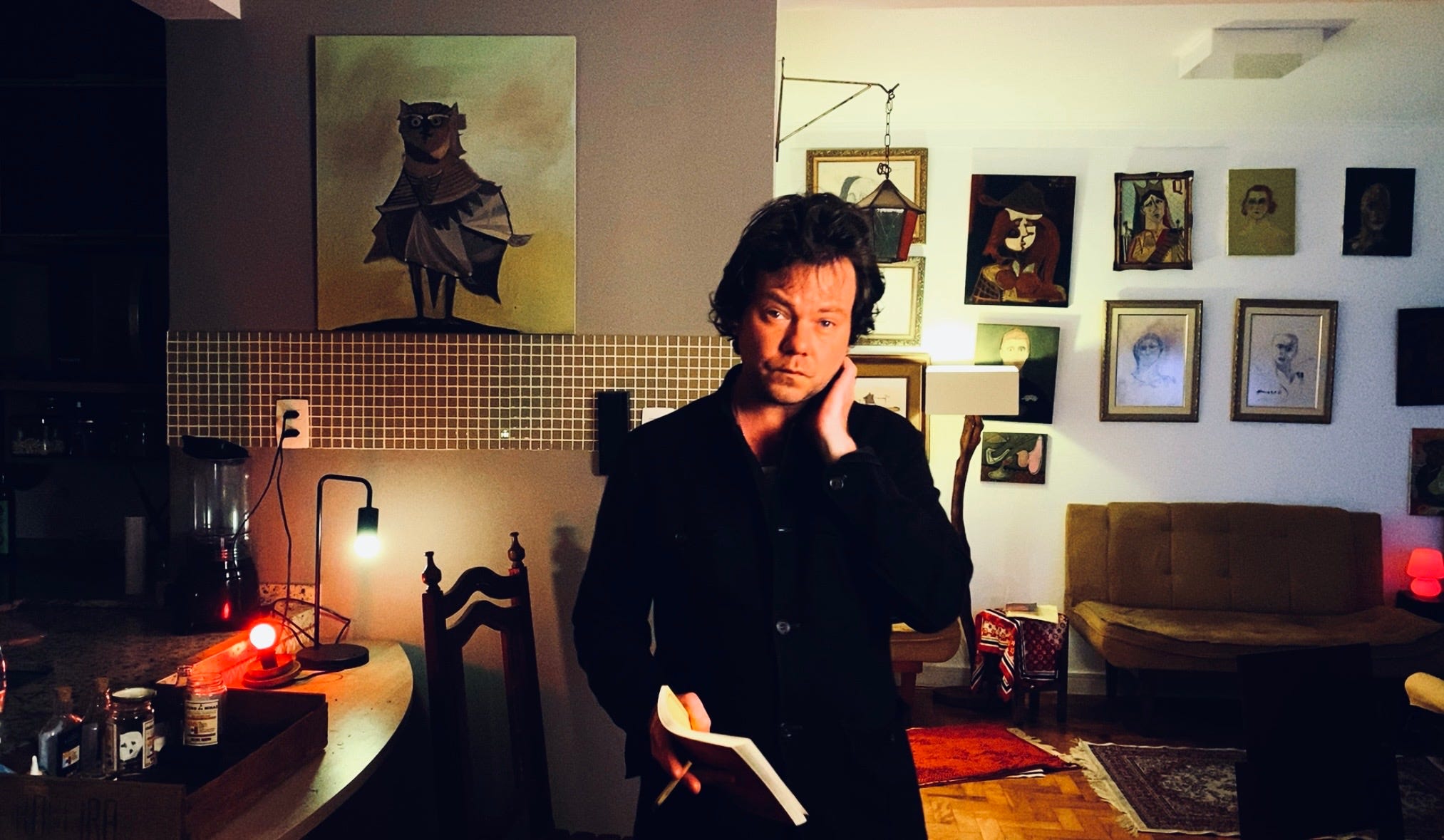
 | A guest post by
|
"I think it would be better if we didn’t genre-icize ourselves to death over our writing or the writing of others." The best point in the piece. Explaining genres is like explaining why a joke is funny. BTW: I love the idea of writing a biography of your father who no one knows.
I cannot agree more with the argument. having wrote the story that my deceased wife would have want to communicate to her friends and family ( and to me) I thought it was probable that what I poured out of me and my grief could be probable. Therefore, I wrote a second part to the book, which was what I remember, think, theorized, confessed, like a probe to her part and the the main argument : did we have and lived Love together? ( Therefore the title "The friend of my mind A love story - influenced by Toni Morrison in "Beloved') . And, I cannot avoid that people will want to categorize it as a memoir but I know it's probable, not true; as a fiction, it's a fiction as you understand it, neither as I understand it, which is "we only write stories that we tell to ourselves". Novel, memoir, auto fiction, the same ; poetry might be different. That's it. Thank you for this post and I will look for more.