

How I Learned to Read Again
On the journey from books to screens and back


Modernity is intent on inculcating short attention spans and insatiable dopamine cravings in its people. Reading has become more difficult and less common. In this piece, Sam Kahn—one of the greatest living essayists and co-founder of The Republic of Letters—tracks his journey with books from youth until today. He speaks honestly and specifically about the pressures working against his reading appetite and ability, and how he has attempted to counteract them.
About Us: Non Grata is a print magazine and online publication aiming to revitalize literature and give it back to the people. Print offerings are available on our website. Digital subscriptions (both free and paid) are available via Substack:

I hit my reading peak when I was eleven or twelve. At the time, it was a joke. I had a bedside table and it was stacked with books, all at different stages of being read. Books migrated to the floor next to the bed, and different stacks migrated to different rooms of the apartment. At the time I really was ravenous. It was clear to me that books were essentially the same as knowledge and were the window into the world—into all kinds of different worlds—but, crucially, that books also contained the key into adulthood. Since then, my reading has basically been in decline and under siege from a wide variety of different adversaries. Let’s list those before getting into my personal reading rehabilitation project.
Middle school, and adolescence in general, were the single greatest blow to my reading. It quickly became clear that, from a social perspective, all this reading was a catastrophic blunder, and I tried to switch gears as quickly as I could—I would come home from school and turn on ESPN or VH1 and try to download pop culture so that I could repeat it back in school the next day.
School itself was an obstacle to my reading. I showed up at my new middle school trying to hide The Republic under The Red Pony, and I’ve had a fantasy from that day to this that the school system would start recognizing and supporting kids like me who clearly were very self-motivated and had an obvious aptitude in one subject as opposed to others. In this fantasy I would have been instantly enrolled in some higher-level English classes and excused from math or science, which, it was completely clear, wasn’t going to be a significant part of my life. But that just wasn’t the case. There were phone calls home, and I learned fairly quickly to revert to the mean.
Then there was social life. I remember carefully packing a suitcase of my books for college when my father told me, “Trust me, there won’t be a moment for reading recreationally.” He didn’t just mean that there would be a deluge of school reading, he meant that there would be so much going on around campus that reading for fun would be a kind of admission of social failure. I took that seriously, felt a sort of guilty conscience whenever I opened up one of my books and tried to think what I should be doing instead. It was a real surprise to me when I realized, somewhere towards sophomore or junior year, that it wasn’t exactly true and lots of cool, perfectly socially-adjusted people were also reading for fun.
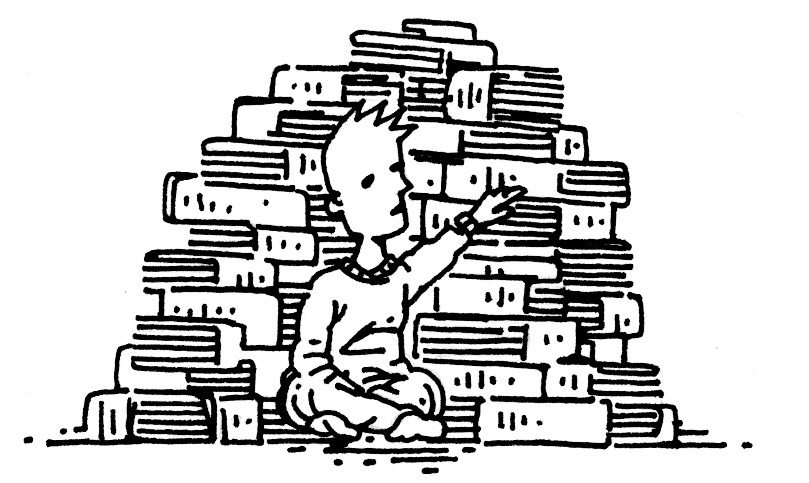
Then there was work life. I sort of had an understanding around this time that reading, even serious reading, was childish, and that adults spent all their time thinking about money, and I remember a moment soon after I graduated when I delivered a kind of private eulogy for my reading life. In the end, it turned out to be not like that. The first job I had out of college involved twelve-hour workdays, but that still left a lot of hours unaccounted for, and I remember the curious guilty pleasure of visiting the used bookstore in town and loading up on a whole bunch of Penguin Classics that the proprietor was visibly surprised to be selling to anyone.
I remember feeling like I’d overcome some kind of hurdle in my reading life at that time—I’d expected work life to grind down my reading and instead my reading (which is to say, my inner life) had somehow outfoxed the work schedule. But I was underestimating my adversaries. That phase was another peak of my reading, and then there was a ten-year period from, roughly, my late twenties to my late thirties when I barely read anything at all—or, at least, my reading consumption slowed to a level that would have deeply embarrassed my eleven-year-old self.
What happened? I was no longer in terror of middle schoolers expecting me to know who Gwen Stefani was or to quote TV commercials back at them. I wasn’t, for the most part, dealing with an onerous worklife that swallowed up all my free time. But there were a few new adversaries.
One was love. Being with a partner meant, essentially, turning over my inner life to the partner. Reading seemed like a way of distancing rather than connecting, and by far the better way to consume content was to stream TV shows together.
Then there were money worries. Adulthood wasn’t quite the grey-flannel-suit enterprise that I had pictured where I was younger, where you entered into the workforce and were essentially lobotomized by it. In millennial life everything was a bit looser and freer, but there was also a drumbeat of constant anxiety. Reading—I mean, reading a long, serious book—seemed, in that context, like checking out, not so different from sitting down on the street and rattling an empty coffee cup. Scrolling was alright—that meant that you were still plugged in, that you were part of the flow of life, where social connections and money opportunities could be made. But there was absolutely zero opportunity of advancing one’s interests by reading a book—there was no conceivable social chit-chat that would turn to people bantering about books, and the knowledge in books was entirely abstract and remote, as opposed to the potentially utilitarian knowledge you might get from a newspaper or a social media post.
From a more macro point of view, what was happening at this time was the final breakdown of a Bourdieauian concept of social status, in which taste was the critical metric of status and being bourgeois or refined meant, among other things, being a reader (for a glimpse of how a Bourdieuian social system worked in practice, it’s worth watching certain movies from the ’70s or ’80s, any Woody Allen movie, for instance, which are basically a cornucopia of high-brow referents). As David Brooks nicely documents in Bobos in Paradise, the bourgeoisie made a kind of collective pact around the 1990s or 2000s to just drop it—to not burden themselves with showing off how much they’d read and to instead just flaunt their wealth while entertaining themselves with talking about TV shows, which were starting to become pretty good.
Then, surprisingly enough, writing was a hindrance to my reading. This is kind of a specialized concern, but I came to feel in my twenties that my writing was a bit drafty and undergraduate, in large part because I was overly influenced by the enormous swath of reading material that I had inhaled through my adolescence. I was very impressed by a line from a medieval Arabic poet where he advises a student to memorize a thousand passages of poetry and then to forget them all again before he could begin writing. I decided that I was in the phase where I needed to forget—I had taken in too many inputs, and I had a tendency to be intimidated or just overly influenced by them, and now was the time, I felt, to clear out my own head and find my voice. This, by the way, I think is pretty good advice to writers, but, at the time, it was accompanied by a certain bitterness on my part towards reading—if reading couldn’t even make me a better writer, I thought, then what really was all that reading for?
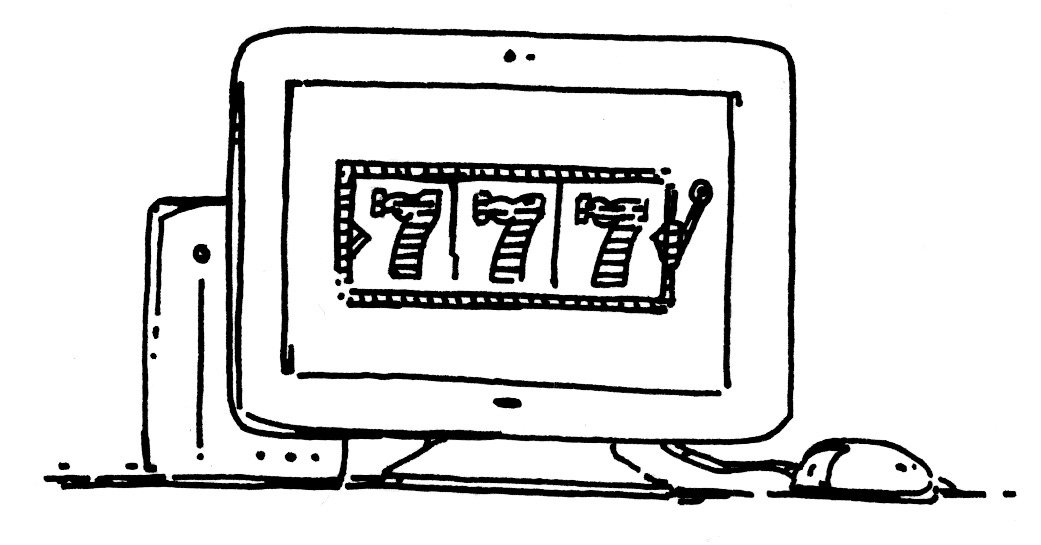
But, of course, the most significant obstacle to reading was social media. There was a long period of time—almost forgotten now—where society split between those who were always online and those who weren’t. I prided myself in being among the people who weren’t—having a Facebook profile but not posting, not obsessively checking Twitter, etc.—but we were all fooling ourselves. The turning point for me came when I watched the documentary The Social Dilemma in 2020 and realized the extent to which I was like the kind of alcoholic who claims that they only drink moderately, but whose life is in fact dominated by booze. “Every time you see the phone on the counter and you just look at it and you know if you reach over it just might have something for you so you play that slot machine to see what you get, right?” the technology ethicist Tristan Harris says in the documentary. The argument was that the phones used deep psychological techniques—it’s called “positive intermittent reinforcement,” if you’re interested—to get you completely hooked. I was old enough to remember how the arrival of the mail in the morning had a similar effect on people, or the way that people might hover by a landline waiting for a phone call. But now it was like people were checking their mailbox a thousand times a day—just the idea of good news coming for you, and only you, was so powerful that, essentially, nothing else could compete with it, certainly not a closed form like a book, which as often as not was written by a dead person and, by definition, could not have a job offer or a romantic possibility or a party invitation or a compliment for you embedded within it.
For the better part of a decade, we all fell victim to this. I remember the most interesting person I knew—a guy who’d become a shaman—saying that his whole spiritual journey was behind him. “Now I am a Facebook customer,” he reported. And my reading habit was one victim of many.
The Social Dilemma probably was the decisive event for me and made me realize the extent to which my behavior—the regular checking of my cell phone—was addiction, no matter that I was probably a bit better than most people I knew. The period since then—call it the last five years—has been a slow and deeply embarrassing journey to learn to read again. In other words, painstakingly and through all kinds of cheap tricks, to learn to do something that used to be about as natural for me as breathing. I sometimes think about it as being like a stroke victim who has to train themselves to walk again or to wake up some dormant hemisphere of their brain—with the difference that nothing bad happened to me, apart from the general current of 21st century life.
What bothered me most, I suppose, was the degradation of my own inner world. Solitude used to be something I looked forward to—the chance to curl up with a book. Now I was twitchy and irritable—constantly checking my phone. I was, in a word, far less mature than I had been when I was eleven or twelve. I could remember when adults might ask each other, as a normal question, “what are you reading?” and that was like an invitation to travel together into a different dimension, into the content of each other’s inner lives and each other’s souls. Asking each other about what they had seen on Netflix or whether they had caught the Grammys didn’t have the same incantatory power. Without that, discourse seemed to be breaking down. Twitter was turning into a flaming mosh pit of dueling online mobs, Instagram and Facebook were aggressively performative, and all of them were heavily manipulated by algorithms and subject to corporate censorship. What reading really meant was getting away from all of that—from an opportunistic culture in which participants are “users” and to the promise that’s embedded in reading at its best, of soul speaking to soul, of individuals maybe continents or centuries away speaking their truth, to the best of their ability, and being received with respect and empathy by an attentive reader. To me, that seemed like a much better, more reciprocal and more honorable, relationship with others than anything that was on offer from my current tech-based social landscape.
So, in my uphill battle to once again be a reader, here are a few of the tricks I’ve tried.

Continue reading this post for free, courtesy of Magazine Non Grata.
 | A guest post by
|