

In Defense of the 21st Century's Most Maligned Writer
Jonathan Franzen was right about basically everything


About Us: Non Grata is a print magazine and online publication aiming to revitalize literature and give it back to the people. Print offerings are available on our website. Digital subscriptions (both free and paid) are available via Substack. For those of you in New York, we have a party coming up on August 1st (RSVP here).
– You won’t change the world with what you do,
And since this frankness seems to have such charms for you,
I tell you, frankly, you’ve become so querulous
That nowadays the world finds you ridiculous.
You turn your nose up, claim our modern manners shock,
But everyone around thinks you’re a laughing stock.
– Well, good, damn it! Yes, good! I ask for nothing more.
I’m quite delighted, that’s what I’ve been hoping for.
Since everyone I know seems hateful in my eyes,
I’d be disgusted, if they thought that I was wise.(from Moliere, The Misanthrope)
Has any serious writer in our time been so widely maligned as Jonathan Franzen? After his public scuffle with Oprah made him a household name, he came out against the internet – and especially against Twitter culture – a decade too early, in those dulcet Obama years when guys like Zuck and Dorsey were still hailed as visionaries, social media as this radical new technology on the brink of liberating the Arab world. Yet instead of freeing the good people of Egypt and Iran, it now appears these media technologies have enslaved us.
Franzen was called a misogynist and worse for dissing Twitter and its attendant websites, Vulture, Salon, Jezebel, et al. The legion of haters have defined Franzen’s public persona, and even cooler heads still posit that Franzen, though an excellent novelist, is a mediocre essayist.
In “Hating Jonathan Franzen”, for instance, Kevin Power proposes to survey Franzen’s essays – but allows the haters to define his work:
Successive waves of online Franzen-hatred have generally taken the form of ad hominem responses to essays, or to remarks made in interviews, or to his occasional appearances on television. That Franzen’s opinions – expressed in forms, very much including the essay, that he has not mastered and that tend to serve him poorly – so often go against the contemporary grain (for instance his distrust of social media) or situate him squarely in a trainspotterish cul de sac of hobbyism (all that birdwatching) mean that he is, from the point of view of the virtue-signalling culture warriors of Twitter, a soft target. Here, once again, Franzen may have to take some of the blame. It’s difficult to think of another contemporary novelist who is served so poorly by out-of-context quotation, or by his own inability to craft acceptable soundbites.
It is very strange to blame a writer for offering opinions that “go against the contemporary grain,” especially when the example provided – “his distrust of social media” – is a point on which Franzen had already proved right in 2019, when this piece was published. Franzen says what he believes, and he has almost always been on target. We shouldn’t hold it against him that a bunch of Twitter gangleaders haven’t liked what he had to say. And I think it perverse that we should expect a serious writer to “craft acceptable soundbites.”
Let us try to take Franzen at his word. On this front, Power describes Franzen’s essays as “cogent, cranky, shapeless, brilliant, bewilderingly slight, sharply observed, fascinatingly confessional, beset by scruples, oddly informal, and weirdly weightless,” and concludes that Franzen “has not developed either a consistent essayistic style nor a particularly distinctive set of preoccupations.”
I reject wholesale the claim that Franzen does not present a cohesive style and worldview. If his essay collections are unfocused, it’s because they’re made up of pieces that ran independently in various magazines. This is the nature of an essay collection: the pieces don’t have to add up, so long as each essay is interesting and cohesive in itself. And they are, though Franzen’s tendency to relate ideas and stories through his own personal experience seems to flummox Power.
What’s more, Franzen’s essayistic oeuvre does add up to a cohesive whole. Broadly, Franzen is a conservationist, an anti-capitalist, an apocalyptic anti-modernist. He identifies acceleration as the essential quality of modernity, and he understands that the other side of change is death, the death of you and me, of everything you’ve ever loved, of poetry and humanity, of the Earth.
In Franzen’s time, capitalistic media technologies – cable TV, the internet, social media – have eroded the once-great literary culture that he and I hold dear. Meanwhile, the threats of nuclear war and global warming make it painfully likely that humans and their machines will bring about the end of the world sooner rather than later.
So what are we to do? How can you live in the face of the apocalypse?
These are the questions Franzen has committed, again and again and again in his work, to figuring out. So let us proceed to his essays, and you can tell me, Dear Reader, whether you find them “weirdly weightless.”
Why Bother?
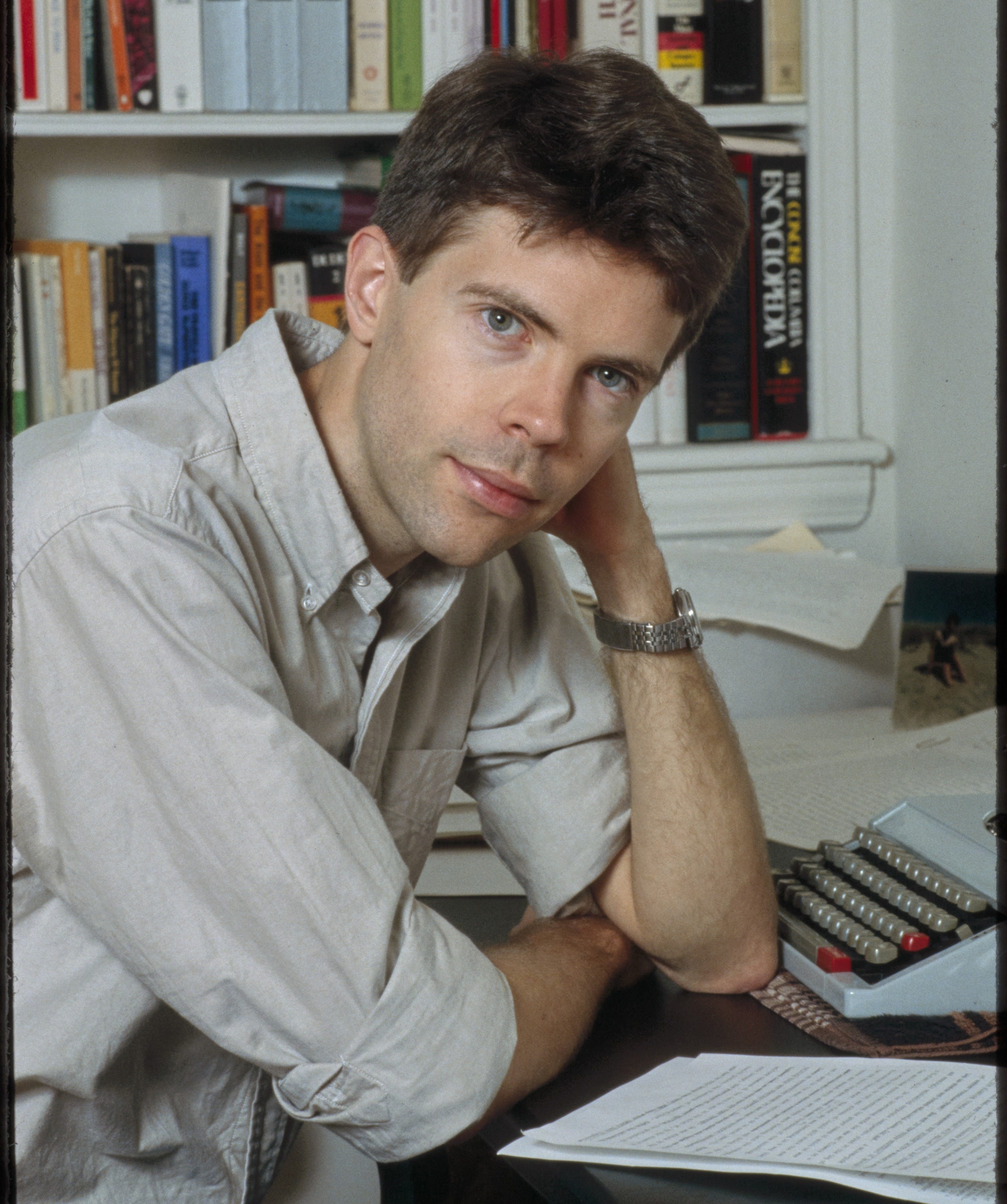
Before The Corrections established Franzen’s reputation as a novelist, he was better known for his essays, especially “Why Bother?”, which ran in Harper’s in 1996.1 Colloquially known as “the Harper’s essay,” it was one of those pieces that gets passed around endlessly, a discourse igniter on the state of the novel in a world dominated by television.
The crisis for Franzen is personal: having published two novels, neither especially successful, he found himself “paralyzed” in writing his third novel, as he attempted to address our culture amidst “the banal ascendancy of television, the electronic fragmentation of public discourse.”
We live in a culture that is not just indifferent to the arts, but hostile to them. Money reigns, and its corporate servants – those who control the media machine – are steadily winning their eighty-year war to replace literature with more profitable entertainments.
Franzen recognizes this. He admits the situation depresses him, and speaks of embracing what he calls depressive realism: “You decide that it’s the world that’s sick, and that the resistance of refusing to function in such a world is healthy.”
But depressive realism, appropriate or not, turns out to be a dead end, at least for the sake of writing fiction:
All the available evidence suggests that you have become a person who’s impossible to live with and no fun to talk to. And as you increasingly feel, as a novelist, that you are one of the last remaining repositories of depressive realism and of the radical critique of the therapeutic society that it represents, the burden of news-bringing that is placed on your art becomes overwhelming. You ask yourself, why am I bothering to write these books? I can’t pretend the mainstream will listen to the news I have to bring. I can’t pretend I’m subverting anything, because any reader capable of decoding my subversive messages does not need to hear them (and the contemporary art scene is a constant reminder of how silly things get when artists start preaching to the choir). I can’t stomach any kind of notion that serious fiction is good for us, because I don’t believe that everything that’s wrong with the world has a cure, and even if I did, what business would I, who feel like the sick one, have in offering it? It’s hard to consider literature a medicine, in any case, when reading it serves mainly to deepen your depressing estrangement from the mainstream; sooner or later the therapeutically minded reader will end up fingering reading itself as the sickness.
Only from this rock bottom futility can Franzen begin to find a way forward. And in the back half of the piece, he pursues the answers to this question: in such a culture, why do we bother to read and write?
This question opens up the piece, and leads him to Shirley Brice Heath, a linguistic anthropologist, who defines two types of readers. The broader group, at least as of 1996, fits two preconditions: as children, their parents modeled the reading habit, and they found a peer with whom they could share the joy of reading.
But there’s also a second group. As Heath describes it:
There’s the social isolate — the child who from an early age felt very different from everyone around him. This is very, very difficult to uncover in an interview. People don’t like to admit that they were social isolates as children. What happens is you take that sense of being different into an imaginary world. But that world, then, is a world you can’t share with the people around you — because it’s imaginary. And so the important dialogue in your life is with the authors of the books you read. Though they aren’t present, they become your community.
Of the two groups, these social-isolate readers are far more likely to become writers: “If writing was the medium of communication within the community of childhood, it makes sense that when writers grow up they continue to find writing vital to their sense of connectedness.” Here Heath looks Franzen in the eye and tells him, “You are a socially isolated individual who desperately wants to communicate with a substantive imaginary world.”
In the thirty years since Franzen wrote this piece, I have to think the first class of readers has gotten smaller. As successive generations grow up with TV, and cable, and video games, and the internet, and smartphones, and social media, fewer adults model the reading habit, leading to fewer and fewer modelled-habit readers to model the habit for their own children.
But I have to think the second class only grows as our culture gets more alienating, community harder to come by. That carries implications for the balance between readers and writers – there’s less and less of a reading public, these days, relative to the writers themselves – but it also speaks to the durable core of the literary community.
In the back half of the essay, this discovery starts to shape Franzen’s behavior. Where once he sought to keep a Pynchon-like distance from the world, this work carried him back to this literary community:
In belatedly following my books out of the house, doing some journalism and even hitting a few parties, I’ve felt less as if I’m introducing myself to the world than as if I’m introducing the world to myself. Once I stepped outside my bubble of despair I found that almost everyone I met shared many of my fears, and that other writers shared all of them.
And, in the face of a technological corporate regime of relentless optimization, Franzen determines that the point of the novel isn’t to change the world, but to preserve things that are worth preserving:
The belief that unifies us is not that a novel can change anything but that it can preserve something . . . Whether they think about it or not, novelists are preserving a tradition of precise, expressive language; a habit of looking past surfaces into interiors; maybe an understanding of private experience and public context as distinct but interpenetrating; maybe mystery, maybe manners. Above all, they are preserving a community of readers and writers, and the way in which members of this community recognize each other is that nothing in the world seems simple to them.
Franzen did not have these answers in mind when he began this essay. His starting point is a personal and cultural crisis with no easy answers; throughout “Why Bother?” you see him grapple his way to an answer. This is one characteristic of Franzen’s essays: he writes to figure it out. He begins with an intractable problem and grapples with it until he uncovers a suitable answer.2
As a result, “Why Bother?” – like many of Franzen’s essays, and many great essays – is loose, but not structureless. There is real satisfaction in following his line of thought as it winds its way to the truth.
Four threads run through Franzen’s best essays. Two, including the above approach, are matters of technique. The other two are the central concerns which define Franzen’s belief system.
One of these concerns is his preoccupation with technological optimism, as promoted by corporate consumer capitalism. That is a complex bundle of shit, so let’s unwind it, bit by bit.
Oversized corporations have long held a domineering influence over American society and culture. In recent decades, this influence has grown with the corporations, as relaxed monopoly enforcements have allowed legacy companies such as Disney to double and triple in size, while newer players such as Google and Amazon expand relentlessly, gaining monopolistic holds on cultural-economic levers such as internet search and ecommerce.
Such companies control the media, and consolidation shows no sign of stopping or slowing. Simply because the Ellisons are willing to take on $54 billion in debt to buy Warner Brothers, the merger becomes inevitable, even though Warner is already a sizable and profitable company on its own, aside from all the debt that past mergers and acquisitions have saddled it with.
These corporations promote a top-down consumer culture. They want you to have mass culture experiences they can profit from – not open, localized experiences they cannot readily extract money from. The short story market, for instance, shriveled not because the audience suddenly abandoned it, but because advertisers in the ’50s and ’60s found television ads far more effective at getting people to buy stuff. As advertisers abandoned general interest magazines such as the Saturday Evening Post, these publications collapsed, crippling the market for magazine fiction.
Want a more recent example? The internet has enabled big corporations to take over local advertising; so Google, Facebook, Microsoft et al gobble up the ad dollars that once supported local newspapers. For many years, Google even coerced publishers to let down their paywalls, undermining the subscription model. If a publisher insisted on charging people for content, Google wouldn’t surface them; and since Google drives more web traffic than every other app or website combined, that’s not really a threat an independent publisher can stand up to. By developing new technologies that make money more efficiently, massive tech companies such as Google bankrupt smaller publishers and local news outlets.
As you can see, these corporations rely on technology to extend their reach ever further. The internet, which was promised to democratize our culture, has instead allowed massive corporations to stretch their tentacles ever further into American life. When these technologies hit critical mass, they’re not so easy to resist. As most Americans turned to app-based dating, for instance, we become less comfortable looking for each other in the real world.
If gut-remodeling the culture wasn’t enough, these tech megacorporations insisted they were making the world a better place, and the media largely took them at their word. For Franzen, this enforced optimism seems the most egregious part of the package; I have to imagine the depressive realist in him is a little happier now that the tech barons aren’t pretending to be the good guys. It’s certainly a consolation (if insufficient) that our media no longer treats these men as heroes.
To sum it up: Franzen’s big problem is that megacorporations are using technology to hollow out the culture and replace it with dull consumerism, and they are insisting that this is actually a good thing, and we should all be happy about it. To the extent that many people are happy about it, well! that just speaks to the rot, to the rot in our culture.
This, it would turn out, was not a very popular viewpoint.
The Kraus Project
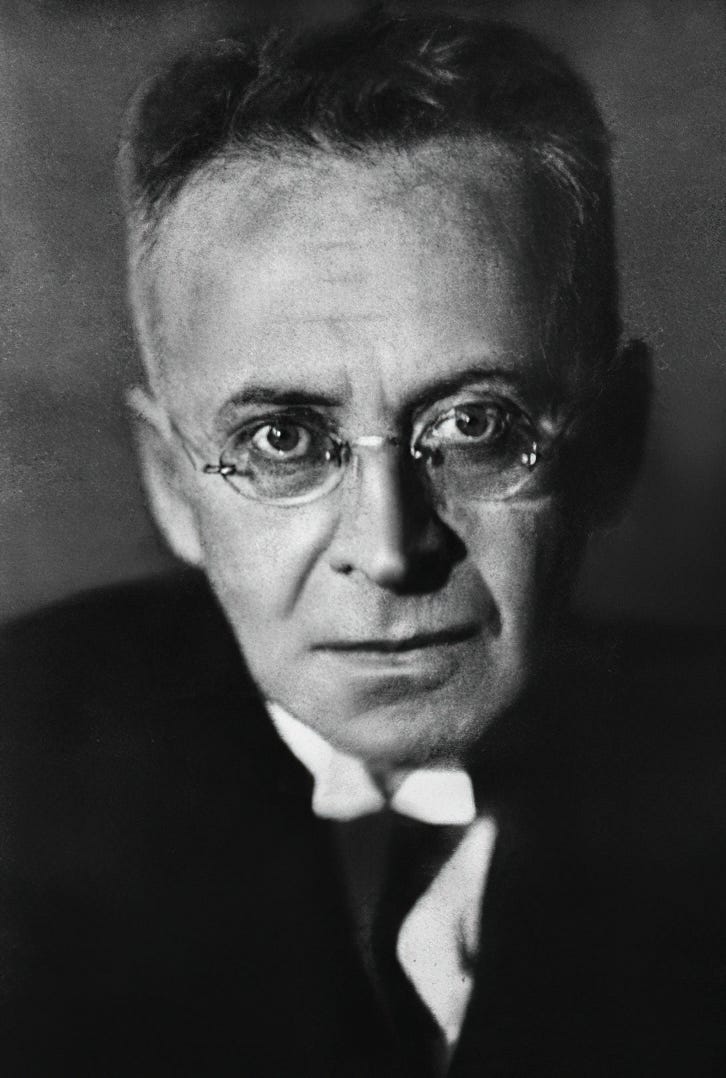
In Power’s attempt to survey Franzen’s essays, he concludes that they are incohesive. But he doesn’t seem to have read The Kraus Project, which is unfortunate, as this is Franzen’s one cohesive essayistic book, and the keystone to his oeuvre.
In The Kraus Project, Franzen offers a heavily annotated translation of Karl Kraus, whom he identifies as a literary father figure. Kraus was a fin-de-siecle Viennese shit-stirrer extraordinaire, who critiqued the shallow newspaper culture of his time in a paper of his own, Die Fackel.3 The book is interspersed with extensive footnotes, including essay-length digressions by Franzen as well conversational back-and-forth with Kraus scholar Paul Reitter and Austrian novelist Daniel Kehlmann.4
The title here has a double meaning: on the one hand, it describes Franzen and company’s work translating and annotating Kraus’s work into a new book. It also refers to Kraus’s project as a writer, which Franzen promises not only to carry to us in this vessel, but to carry onward in his own work as a writer.
For instance, one of Kraus’s – and Franzen’s – fixations is the feuilleton. The feuilleton was a sort of cultural gossip section that ran in the newspapers of 19th and early 20th century Europe; when Franzen talks about the feuilletonists, he’s also talking about all the pithy websites – Slate, Salon, Gawker, the Huffington Post, Jezebel, Vox – that coalesced around Twitter in the 2010s.
These sites were substantially ads-based and had much clearer user data than any publisher would have had a decade prior. You could see in real time what articles were getting clicked on and read, allowing editors to rapidly shape their efforts in pursuit of the digital audience.
But text-on-web has never monetized well via ads, except when targeted at very specific audiences.5 Because ads didn’t make much money, these sites needed their staff and contract writers to crank out a lot of pieces with a decent chance of breaking out on social and on search. The most efficient way to do this was to take a story from elsewhere – such as an interview or Twitter controversy – and cover it with just enough spin to call it, if not original, at least non-duplicate.
The Kraus Project is the key to understanding Franzen’s essays, and the dialogue between Franzen, Reitter, and Kehlmann is Franzen’s way of modeling what healthy literary conversation should look like. Which is to say, not Twitter. I’m going to excerpt Franzen at length here, because we need to reckon with him on his own terms, and this is the crux of his argument against digital media:
In my own little corner of the world, which is to say American fiction, Jeff Bezos of Amazon may not be the antichrist, but he surely looks like one of the four horsemen. Amazon wants a world in which books are either self-published or published by Amazon itself, with readers dependent on Amazon reviews in choosing books, and with authors responsible for their own promotion. The work of yakkers and tweeters and braggers, and of people with the money to pay somebody to churn out hundreds of five-star reviews for them, will flourish in that world. But what happens to the people who became writers because yakking and tweeting and bragging felt to them like intolerably shallow forms of social engagement? What happens to the people who want to communicate in depth, individual to individual, in the quiet and permanence of the printed word, and who were shaped by their love of writers who wrote when publication still assured some kind of quality control and literary reputations were more than a matter of self-promotional decibel levels? As fewer and fewer readers are able to find their way, amid all the noise and disappointing books and phony reviews, to the work produced by the new generation of this kind of writer, Amazon is well on its way to making writers into the kind of prospectless workers whom its contractors employ in its warehouses, laboring harder for less and less, with no job security, because the warehouses are situated in places where they’re the only business hiring. And the more of the population that lives like those workers, the greater the downward pressure on book prices and the greater the squeeze on conventional booksellers, because when you’re not making much money you want your entertainment for free, and when your life is hard you want instant gratification (”Overnight free shipping!”).
But so the physical book goes on the endangered-species list, so responsible book reviewers go extinct, so independent bookstores disappear, so literary novelists are conscripted into Jennifer-Weinerish self-promotion, so the Big Six publishers get killed and devoured by Amazon: this looks like an apocalypse only if most of your friends are writers, editors or booksellers.
Franzen here is describing a multi-pronged assault by corporate media technology on literary culture. On Amazon’s part, that means devaluing and commodifying books while taking control over distribution, so that Amazon can make more money at authors’ expense. For this to happen, the existing critical apparatus must be degraded and replaced by a combination of customer reviews and social media discourse.
Much of this line of thinking is effectively taken for granted in the 2020s. But in 2013, the tweeters and their accompanying websites ridiculed Franzen for his attacks on Twitter.
In the L Magazine, Kristin Iverson asked, “who can blame him for not understanding what the appeal of Twitter is? Which, by the way, the appeal is fun, fast information, and we should all refuse to feel guilty about enjoying that.” As though something cannot be “fun” and have destructive consequences for the individual and society.
Writing in Slate, Katy Waldman provides a perfect example of the pithy Twitter-summary. In response to Franzen’s notion that “many writers were ‘feeling absolutely coerced into this constant self-promotion’” on social media, she begins with a bit of ridicule: “I have a confession. I was coerced into writing this post. By Twitter.” She drops in a Weiner tweet for good measure:
Writers being “coerced” onto social media instead of developing their craft. Coerced by whom? How? “10 tweets by noon or the puppy gets it?”
It’s hard to argue the point with someone who seemingly does not understand coercion takes forms that aren’t a literal gun to the head. This ridicule is especially rich coming from a writer being paid $38k a year to churn out Twitter summaries for Slate.com, all freely available because Google won’t let publishers charge for content as Google gobbles up internet ad revenues for itself. If you don’t see any coercion there, I don’t know what to tell you.
Throughout her piece, Waldman ridicules Franzen without addressing him:
Perhaps the discrepancy between Franzen’s facts and the tweeters’ delusions is one of those “supernaturally destructive consequences” of “the frank monopolism of the techno-titans,” whose “infernal new machine seems increasingly to obey nothing but its own developmental logic,” being “far more enslavingly addictive, and far more pandering to people’s worst impulses, than newspapers ever were.”
Or perhaps the truth is something even darker. Perhaps we are all characters in a sprawling Jonathan Franzen novel. He is writing our reality, but he hasn’t yet gotten to the part where shadowy Internet overlords banish Henry James, Mark Twain, and the rest from the literary canon retroactively because they weren’t on Twitter.6
This is hard stuff to unpack, because she’s not actually saying anything. Before we proceed, we should let Franzen have his say, unsnipped:
Kraus in this passage is evoking the Sorcerer’s Apprentice – the unintended unleashing of supernaturally destructive consequences. Although he’s talking about the modern newspaper, his critique applies, if anything, even better to contemporary technoconsumerism. For Kraus, the infernal thing about newspapers was their fraudulent coupling of Enlightenment ideals with a relentless pursuit of profit and power. With technoconsumerism, a humanist rhetoric of “empowerment” and “creativity” and “freedom” and “connection” and “democracy” abets the frank monopolism of the techno-titans; the new infernal machine seems increasingly to obey nothing but its own developmental logic, and it’s far more enslavingly addictive, and far more pandering to people’s worst impulses, than newspapers ever were.
Waldman characterizes these statements as grandiose and paranoid. But what would she dispute? Would she assert that the tech oligarchs have not achieved monopolies the likes of which we have not seen in 100 years? Would she argue that these monopolies are good, not ill? No, because that would require making an actual stand.
Does the growth imperative make social media addictive by design? I don’t have to argue the case – not because we now take it for granted, but because Waldman here does not argue otherwise. She does not dispute that social media is addictive, that it panders to people’s worst impulses, or that these aspects are having a negative impact on our culture. Because that would require taking an actual stand, and Waldman does not have the guts or the ground to stand against Franzen on this point, or on any point.
In 2013, the web sure seemed democratic, but it was also surveilling its users and making it harder for artists to make a living, all while consolidating money and power in the hands of wealthier oligarchs and corporate bureaucrats than the world has ever seen. Waldman, apparently, has nothing to say about this, other than ‘big if true!’
We now take Franzen’s argument for granted, but the general response in 2013 was ‘let’s laugh at the old crank yelling at the cloud’. It was a dumb time.
Save what you can
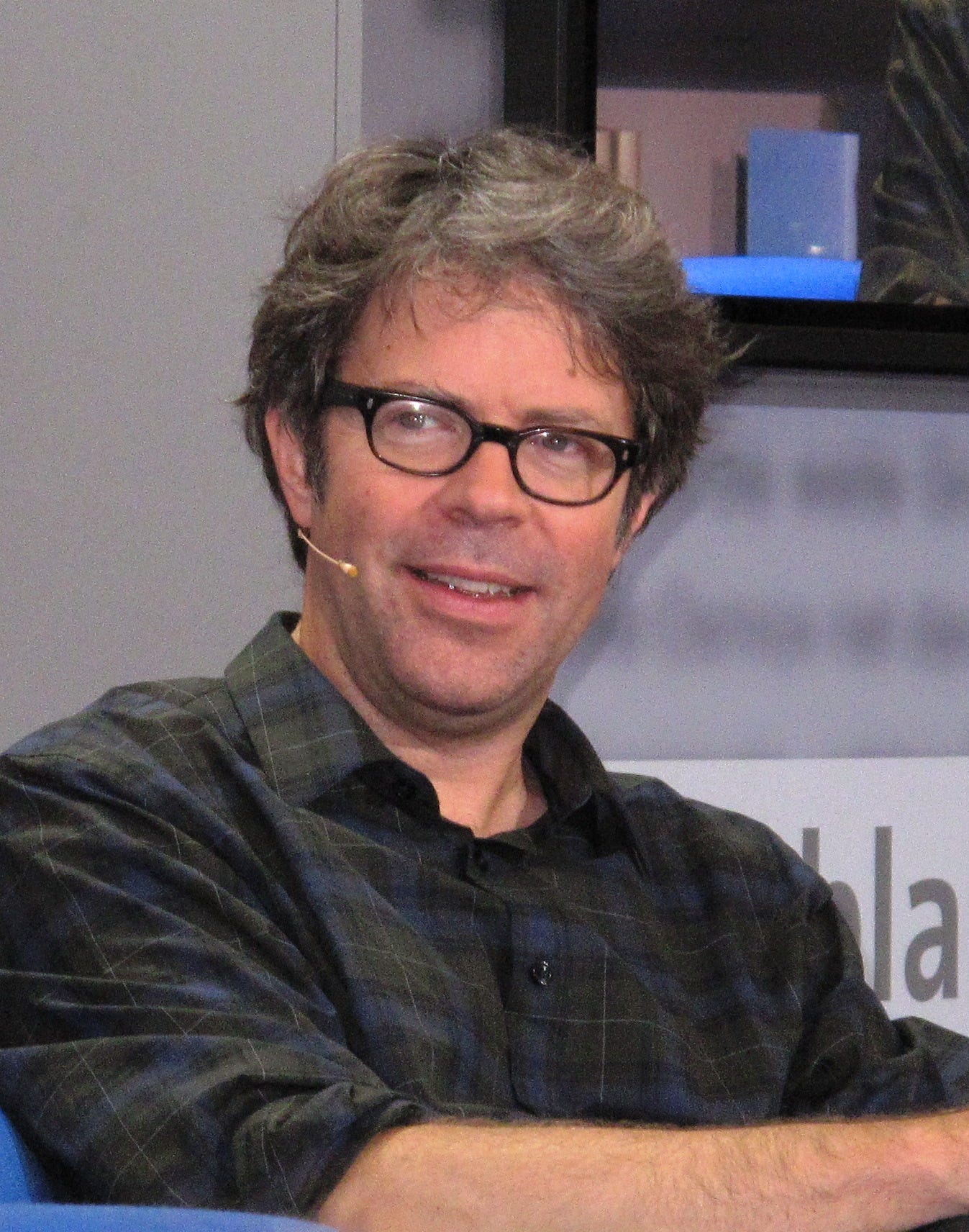
Earlier I mentioned the four threads that run through Franzen’s essays. One is his tendency to write to find out.7 Another is his opposition to the corporate technoconsumerist machine that dominates our culture; this is the most central theme of The Kraus Project.
Franzen’s other recurring interest is preservationism. In “Why Bother?” he defines the point of the novel as preserving things, most of all the literary community. The Kraus Project is itself an act of preservation: Franzen is celebrating Kraus and carrying his message forward to our time, and he’s doing so for several reasons.
For one, Kraus’s concerns are more relevant than ever. More important, Franzen loves Kraus’s writing and wants to share it, not just for our sake but also for Kraus’s, since Kraus is not exactly canonized in the English-language literary world.
Franzen specifically chooses to translate and annotate “Nestroy and Posterity,” in which Kraus is, in 1912, doing the same thing for Johann Nestroy, celebrating an underrated Viennese dramatist from the mid-19th century. As Kehlmann notes,
Kraus’s persistent championing of Nestroy had consequences: Nestroy today is acknowledged to be perhaps the greatest comic genius in Austrian literature. His plays are produced and he’s read in school; he’s a classic whose literary status is no longer in dispute—at least in Austria.
Though Franzen is no right-winger, there is something conservative about his tendency to insist that progress is not always a good thing, and that bits of the past and present are worth holding onto, in spite of the forward motion of civilization. There is a tradition here that traces back from Rousseau to Thoreau to Kraus to our own contemporaries, such as Jonathan Franzen and Jenny Odell.
This instinct comes out directly in his essays from the 2010s about conservationism in the face of global warming. In “Save What You Love”, for instance, he writes:
As long as mitigating climate change trumps all other environmental concerns, no landscape on earth is safe. Like globalism, climatism alienates. Americans today live far from the ecological damage that their consumption habits cause, and even if future consumers are more enlightened about carbon footprints, and fill their tanks with certified green fuel, they’ll still be alienated. Only an appreciation of nature as a collection of specific natural habitats, rather than as an abstract thing that is “dying,” can avert the complete denaturing of the world.
The surprising thing about preservation is that it is not oriented towards the past. What’s gone is gone, and there ain’t no bringing it back. We could orient ourselves to the future, but that’s not very sustaining, since the future is not really accessible to us, and because we’re all doomed to perish before long. Instead, Franzen orients his conservationism to the present, which is the only time in which we can build and sustain a meaningful relationship to the world we live in. Franzen
Though Franzen carried this line of thinking forward in another landmark essay, “What If We Stopped Pretending?” we will leave his environmental concerns here. I will only say that his basis for this essay – that we’re all effectively doomed – he has not yet been proven right. We can only hope that it never will be. But in the years since he wrote it, it seems to me we have declared a premature victory while continuing to build gas-fired power plants to fuel data centers no one really wants, all so we can put maybe a billion people out of work. Anyway!
Of course we’re doomed, all of us, inevitably and irrevocably. My first real love was poetry; whether or not we incinerate the Earth, that grand four-thousand-year-old tradition seems to have run its course.
We’re doomed, so what? What will you do now, with the situation you’ve been given?
Let’s get more specific: what is left of literature, and how will we live with it?
We are living through a total cultural reorganization. It is not over yet. As the literary public shrinks, the literary community becomes ever more essential. And yet our remaining literary institutions – chief among them The New Yorker and the New York Times’ book desk – are not aligned with this situation. They do not serve the literary community but instead exist to launder cultural cachet to bourgeois readers who want to appear refined. The New Yorker’s real product is not writing but covers, cartoons, and tote bags.
This misalignment between literary institutions and literary culture exposes these institutions. Never before have they been so vulnerable.
They are vulnerable in part because of another contradiction: their relationship to the literary audience is coupled with a profound ignorance of what readers really enjoy. They launder cultural cachet, which is not the same as sustenance, and so their readers are figuratively thin and pretty but starved for stories that stir the soul. The books they celebrate are predicated on vain moralizing. He who reads such a book might find his social values affirmed, or it might make him feel smart or self-righteous. But it will not entertain – which Franzen (and I) insist is the first and possibly only honest duty of fiction.
I believe the literary public can be rebuilt. We have already reached the zenith of screens in schools; as more parents insist their kids put away the tablet and open a damn book, we can anticipate something of a rebound.
What’s more, literary fiction’s most direct rival – prestige TV – has fallen off from its prepandemic peak. Making television is profoundly expensive, and now that the easy money’s gone, the studios are understandably sticking with safer bets. Which is to say, a lot of unoriginal IP-driven fare. Succession has no successor; if you want an exciting original story of high literary merit, you’ll have to open a book.
So it is incumbent upon us that readers will find therein a text that at least tries to be as dramatic as A Farewell to Arms or Crossroads or Beloved or Absalom Absalom. I’m not saying you have to be on that level – but if you’re not trying to write something dramatic, what’s the point? That’s a rhetorical question, I won’t indulge excuses. You have to reward readers, starting on page one.
If we are to have a literary breakthrough it will require a movement. Will: future tense. This movement will come from the literary community, from the durable core of writer-readers like you and me. So I beseech you, go and befriend your fellow writers, the Arturo Belanos and Ulises Limas of the world, the beautiful real-ass nobodies. Send someone a DM. If you’re in Los Angeles, let it be me and we’ll grab a drink or whatever. Whether you’re here to stay or just passing through – we’re all passing through in the long run, even Shakespeare, he passed, he’s through – the scenes will be local and they will not revolve around New York.
Because before you can have a movement, you’ve got to have a scene. Better yet, a hundred scenes. Lately I’ve been thinking about David Byrne’s eight rules to making a scene, as written in How Music Works. How can we apply these to fostering literary community, whether locally or in a magazine or online?
1. There must be a venue that is of appropriate size and location in which to present new material
2. The artists should be allowed to play their own material
3. Performing musicians must get in for free on their off nights (and maybe get free beer too)
4. There must be a sense of alienation from the prevailing music scene
5. Rent must be low—and it must stay low
6. Bands must be paid fairly
7. Social transparency must be encouraged
8. It must be possible to ignore the band when necessary
Some of these rules are more straightforward than others. How can we make it possible to ignore the band when necessary? One thing he’s getting at is that a club shouldn’t be purely focused on the performance; to be a scene you’ve got to have room for conversation and activity that has nothing to do with whatever’s playing. So what does that mean for the magazine, or for Substack? What do any of these rules mean when applied to literary culture?
That could be a subject for another essay – our present one has ended.
In Harper’s, it was published under the title “Perchance to Dream.” Throughout this essay, we’ll use the titles Franzen gave these essays in various collections.
And the longer you grapple with something, the higher the bar on the “suitable answer.”
Kraus’s various nicknames – the apocalyptic satirist, the Great Hater, the Grumbler – suggest the literary equivalent of a pro wrestler.
The book does not have “three hundred pages of anecdotal footnotes,” as Power claims. It runs 300 pages in total, featuring Kraus’s essays in both English and German alongside admittedly extensive footnotes, which I’d estimate run about 150 pages in total. But the footnotes are the point; you might as well complain about the footnotes in Pale Fire.
This ad model was effectively forced on publishers by Google, which until 2017 refused to rank a website if it didn’t allow free access to at least five free articles per day. Google drives about two-thirds of web traffic, so they’re not really someone a publisher can say no to without serious consequences. Google, mind you, was seen as the ideal tech company well into the 2010s, the good guys who proved tech didn’t have to be evil, as described by the very writers paid a pittance to churn up slop for the slop machine.
This last point is gross exaggeration on her part. Social media can’t retroactively banish a writer such as Twain for not being on Twitter, but Franzen never suggested as much; he is worried about writers in the present.
One matter of technique that is not discussed in depth here: Franzen’s best essays, we must admit, often include a tangible element of personal grievance.
 | A guest post by
|
I saw Franzen speak recently and he shared three rules he uses for writing: (1) Complete honesty, (2) Unconditional love for characters, (3) Bias for conflict. Pretty good rules imo!
It's fascinating to see him compare Twitter to cigarettes back in 2012. That comparison has certainly stood the test of time. And I keep hearing that zoomers are getting into bird-watching
Loved this, especially the end. Arguably the best part about being a standup comic is access to “the scene,” the infinite well of comic hangs where every stranger feels familiar