

Living in Public
On the obliteration of private life in modernity


Something sacred has been lost with the erosion of privacy in modernity. It goes beyond the annoyance that comes with the new risk of being recorded everywhere you go. It goes beyond the distaste of scrolling through sometimes very strange confessions. What is it? Does this intuition make sense? What are we losing? These are a few of the questions that Jared Henderson addresses in “Living in Public.” Here he makes clear what privacy does for relationships, and how ruinous the degradation of it can be to love, friendship, and romance alike. It is a tremendous honor to publish his work.
If you’d like a physical copy of the magazine, you can either (1) subscribe to the annual or founding plan via Substack (2) make a purchase from our website. There is a lot of money behind the ecosystem of high-dopamine internet dreck we are battling. We do not have very much money. We are fighting like a guerrilla band in the jungle. Join us.

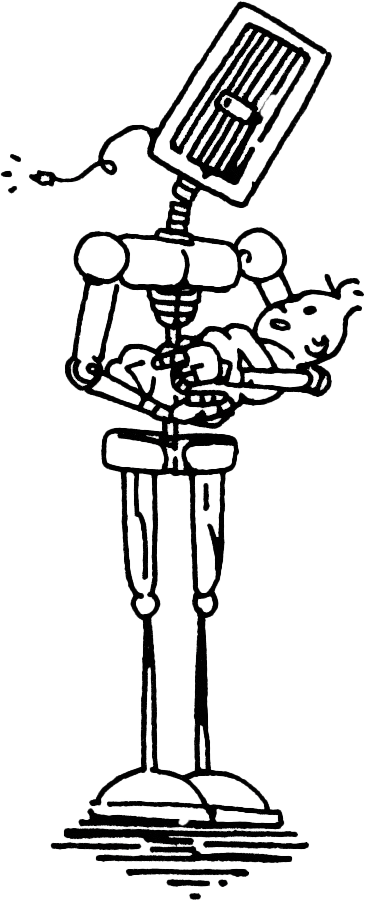
My wife gave birth to our son, Theodore, in 2023. He was delivered a few days after his due date, and in the week leading to his birth much of my time was spent on my phone. I Googled constantly: how to measure contractions, when to go to the hospital, induce pregnancy methods reddit, things of that sort. But I also spent a lot of time taking phone calls and answering text messages from family, all of whom were eager to meet the baby. I say “meet” here in a sense that would have been unintelligible to us ten or twenty years ago. I live in Texas, my mother lives in Ohio, and my father lives in Florida. Neither of them would be present at the birth, and neither would they be at our home in the first few weeks. They would “meet” my son, first and foremost, through their phones.
Birth, it turns out, is a lot like war: prolonged periods of boredom punctuated by moments of terror. You arrive at the hospital, thinking you’ll meet your son and perhaps be home for dinner, and then you’re shuffled into a waiting room, where the mother’s vitals can be measured until she has moved into a more active period of labor. You wait, you’re visited by a nurse or a doctor, and you wait some more. My wife brought a book with her to the hospital: the Tao Te Ching, a book she’d spent years studying in Hong Kong. I brought a book, too: China Mieville’s The City and The City. She read a great deal while she waited to give birth. I didn’t—I was stuck on my phone. Every few minutes, I received messages from various family members. Any updates? Anything? Is he here yet?
After fourteen hours of labor, my son was born. I sent a message to my family to let them know. Theodore is here! I wrote. Messages like Congratulations! and Praise God! were sent, but then another sort of message followed: Any pictures? I quickly became annoyed. These were the first moments of my son’s new life; I should be giving him my full attention. Instead, I was asked to document this time, turning it into content for distant family members to consume.
This minor domestic scene is likely familiar. Nearly all of us have some friend or relation who demands pictures, updates, or constant contact. What is more interesting is how these demands are made by people who are not family or our closest friends. With the advent of the smartphone and social media came a new, unprecedented level of publicity—a demand to take what had previously been private and turn it into content that can be consumed by a wider group of people, sometimes even the public at large. All of us, to a greater or lesser extent, are now living in public.
#
In 2013, Dave Eggers released The Circle, a near-future science fiction novel about a tech company, the titular Circle, a fictitious hybrid of Facebook, Instagram, Twitter, and Amazon; the purveyor of a true “everything app,” the sort of app that can encompass a user’s entire life. It is the sort of app Elon Musk has tried and failed to build, but has been common in China for years. The Circle is an “internet novel,” but not a novel for the terminally online. Instead, it is a warning for all of us—Eggers is showing us what we might become when we live all of our lives in the public eye.
The story follows Mae, fresh out of college, as she begins working for the Circle. Though she begins at the bottom, working a glorified customer service job, she quickly rises. Soon she becomes notable for her‘“PartiRank” (an internal metric for measuring employees’ social participation); at the hinge of the novel, she is asked to be the second employee to “go transparent,” constantly streaming her life for anyone who wants to tune in. When this is announced at a corporate all-hands, some new slogans are introduced: Secrets are Lies. Sharing is Caring. Privacy is Theft.
Most dystopian novels posit a malignant force—often the government—that has stripped away the rights and dignity of the population. Orwell’s Party, led by Big Brother, so thoroughly subjugates the people of Oceania that they are unable to think outside of the terms imposed upon them. Huxley’s Brave New World relies on brainwashing, which begins in utero. Eggers chooses a different strategy, freely borrowing from tech jargon, corporate H.R. speak, and the language of cults throughout his novel. The Circle and its users deal in the language of moral obligations and social etiquette. Mae is asked to consider their feelings. She needs to make sure that she’s living up to expectations. She must strive to be better, friendlier, kinder. (It is very seductive; a reader can for a time see the logic and struggle to resist it.) Where Orwell’s Party members and proles are asked to believe the impossible, Mae is asked to take ordinary social norms to their logical conclusions. The genius of the novel—and this, I think, is Eggers’ real insight—is the revelation that new technologies can take old social norms to such extremes that they become hideously deformed. By the time we notice, it is already too late.
Here is the world Eggers asks us to imagine: a world where everyone knows everything. This a world that is totally transparent, where no one has anywhere to hide. The Circle, as a work of satire, takes this to the limit, with 24/7 livestreams of the mundanity of human existence. The early reviews of Eggers’ novel called it prescient, but some readers felt the novel was implausible, bordering on the absurd. In 2013, it was difficult to imagine that anyone—even a gullible, dewy-eyed college grad like Mae—would choose to expand the public sphere so radically, much less that they would agree to stream their lives. It was almost impossible to imagine hordes of online users willingly giving up every semblance of privacy and, critically, demanding that everyone else does the same.
#
One decade after the publication of Eggers’ novel, Kai Cenat—one of the largest streamers on Twitch—streamed his life for thirty days. It was one of the largest events in the platform’s history. In 2024, he did it again. In the announcement video for the second thirty-day livestream, his therapist, played by Kim Kardashian, tells him that this doesn’t sound healthy; they don’t linger on the point. The music quickens and rises in volume, and Cenat checks his phone. He’s fallen to #2—another streamer is now at the top of the charts. He calls for help, and within a few seconds he’s driving away. He must do something about this, something big. So, he decides he’ll do another stream, for another thirty days.
While streaming for thirty days straight, Cenat’s viewers see everything. They see celebrities—Snoop Dogg, the dance crew Jabbawockeez, and YouTubers like Mark Rober—as they visit him in his room. They see him chatting with his friends, some of whom join him for the entire thirty-day stream. They even see him sleep.
In 2025, he did it for a third time. Annual thirty-day livestreams are now part of Cenat’s legacy, or at least his brand.
I find all this mysterious. I cannot see the appeal of watching someone for twenty-four hours a day, even if they fill the time with spectacle. My reaction goes further than skepticism—I find the idea of a 24/7 livestream repulsive. We are seeing things we were not meant to see. I am clearly the outlier. Cenat averaged nearly 120,000 viewers during his 690-hour stream in 2024. His peak viewership: 623,362. Streaming has made him a multi-millionaire, estimates of his net worth ranging from fourteen to thirty-five million dollars. Even assuming that all these estimates are inflated, we can safely say that in his five years of streaming, Cenat has made more than most human beings will make in their lifetimes. It all comes down to a simple fact: Cenat is giving the people what they want. They want complete and total access to someone’s life; they want to see, hear, and vicariously experience everything. Perhaps The Circle was not so absurd after all.
It’s tempting to dismiss Cenat as an outlier. He’s an entrepreneur and an entertainer—he’s clearly putting on a show. Only a fool, or a child, would think that the audience is seeing his life as he lives it off camera. (But we must consider the possibility that his audience is entirely made up of fools and children.) Yet a look at any social media platform will show you endless examples of people turning their lives into content. Influencers, both actual and aspiring, share themselves getting up, making coffee, studying, commuting, crying. Every waking moment can be captured, turned into a clip, and monetized. Most of it is tedious, poorly produced, and boring, yet the genres of “day in the life” vlogs and “I.R.L.” streams prove to be some of the most popular across these platforms. These influencers allow the public into their lives, and their audience is grateful. Sharing is caring, after all. When these influencers withhold any information—anything at all—a jealous horde goes searching for the truth, because privacy is theft. When the truth is discovered, there’s often a backlash, as secrets are lies. As you grow your platform online, you are expected to give more and more of yourself to the audience. Eventually, you give them everything.
Eggers wasn’t wrong about the war on privacy; he was just a few years too early. Writing in the early days of social media, he saw how this would play out. Corporations and governments may be hell-bent on collecting every last bit of data they can—often with the aim of increasing the surveillance state or serving perfectly tailored advertisements to users—but we, collectively, have decided that we don’t really mind. Nobody has to steal our data—we’ll give it away for free. You only need to like and subscribe.
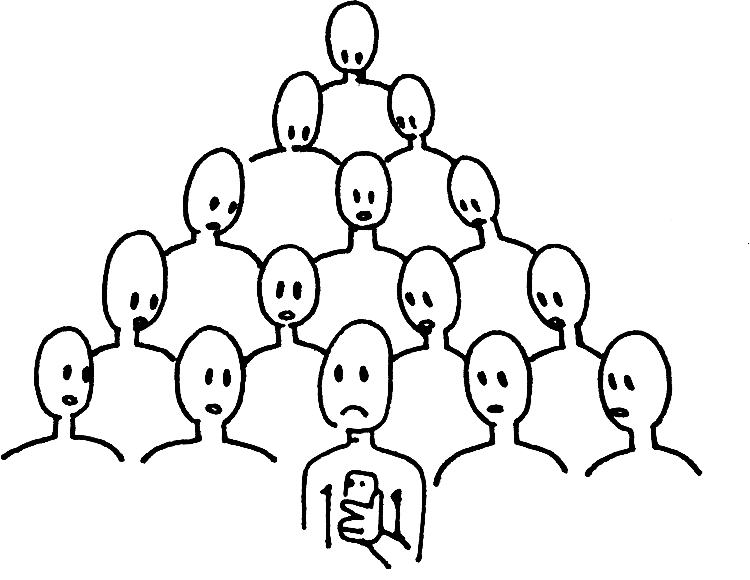
Navigate to a stranger’s Twitter page and see what you can find. You’ll see who they vote for, where they live, what they had for breakfast. You might find a litany of identity-markers in their bio: gender, race, sexuality, disability status. Scroll down the page, and you’ll be treated to a stream of their immediate thoughts—and, often, some of their most embarrassing moments. Yet you do not feel any real sense of intimacy with this person; they may become familiar, but only in a dull sort of way. You’ll learn everything about them, and then you’ll navigate to another page.
#
Relationships—whether they be with a partner, a friend, or even a coworker—are built upon a foundation of privacy. To divulge a secret is to allow another human being into your private sphere. Telling a secret, or sharing any other hidden fact about yourself, is a way of building and sustaining intimacy. You grow closer to another as you reveal more about yourself: the things you are ashamed of, the struggles you have overcome (or are still in battle against), the strange contours of your life. And we expect some level of reciprocity: as I divulge more about myself to you, I expect you to do the same for me. But this is, critically, a non-coercive exercise. It is in the free sharing of intimate details that we grow closer, not in the compelled disclosure of our entire history. There, two people meet as equals and say, together, “I want you to know more about me.”
But in order to share these details, there must be something that is still private—you must have something that has not previously been shared. Only when there is a preexisting private realm, a sphere of life which you can invite someone into, can you achieve this kind of relational intimacy. Thus, there is some truth to the slogan Sharing is caring, as when I share some intimate detail or embarrassing secret with you, I am telling you that I care about you. As you receive this information without judgment, you are telling me that you care about me. Our bond is strengthened, and we may care more for each other as a result. Anyone who has experienced the terror of confessing some terrible or embarrassing fact to their spouse or partner knows this, and they know that one of life’s greatest joys is when that person can look at you and say, “I still love you.” The vulnerability that comes from sharing brings with it the possibility of a deepening relationship, contributing to the mutual flourishing of all involved.
This is very different from our compulsive sharing with the online world. We do not share information with a select few in the hopes of building the relationships that make life worth living. Rather, we share everything with everyone. As the world has become more transparent, and as the private sphere has receded and the public sphere has expanded, we have not grown closer together. There are still wars and genocides, along with new battlefronts in the culture war, and we have, if anything, invented new ways to be cruel to one another in light of the information abundance we presently enjoy. No amount of I.R.L. vlogs will convince someone that their enemies are, in fact, people; instead, all content can be endlessly scrutinized, searching for evidence of a lingering evil that must be destroyed. We become more transparent, and thus we eliminate the private sphere altogether, but we do not grow closer as a consequence.
Above all, we build a much more demanding world. Byung-Chul Han calls our present condition infomania: we always hunger for more information. There must always be more content, more data to consume. Production must keep up with demand. So, we post, and share, and blog, and confess over and over again, pointing a camera into our most intimate spaces and allowing all the world to tune in.
When we share intimate details with a loved one, or with someone whom we hope to love, it is non-coercive and contributes to mutual intimacy, drawing us closer to each other. But this cannot occur when we share everything with everyone, especially online. We cannot be intimate with a million people, or even a thousand. The relationship will necessarily differ in kind rather than degree. The audience views you from their screens, and wherever there is an audience, there is a performer. We begin to perform to this unknown audience, and so we transform our lives into more content for the masses to consume. We temporarily sate the appetites of the infomanics, but the hunger always returns.
 | A guest post by
|
I feel for all those young people who are rebuked for making a trivial mistake in their personal lives, or even for making a contestable choice . And when they try to confront the same trolls, they are treated as guilty for not having the “thick skin” to face the backlash. I am not saying they aren’t at fault, but my point is that trolls on the internet would never comment on others’ lives offline the way they do online. The main point is that they do not treat the people behind the screens as their equals, and their morality changes conveniently for them. Things that are seen as problematic suddenly become fair and legitimate once you are online.
This is a great line: "Birth, it turns out, is a lot like war: prolonged periods of boredom punctuated by moments of terror." I enjoyed the piece. It's thought-provoking. In response, I would only say that, despite being constantly streaming, how much is that guy really sharing? Perhaps that's the pull of it—to give the illusion of full exposure. He's hiding in full sight.