

On Writing No. 2
Novelist Jim Shepard


Originally printed in Vol. 1 No. 2, The Dumb Phone. Print subscriptions are available on our website. Digital subscriptions (both free and paid) are available via Substack. If you purchased a physical copy, send us a DM and we’ll comp your Substack subscription:
I first came across Jim Shepard’s work in County Highway last year, a story titled “The Sons of Liberty.” I’ve never gone in for historical fiction, but I was enjoying it too much, too immediately, to remember to think of genre. After I finished, for a long time, I lay in the emotion, staring up at the ceiling on a Sunday afternoon, during what must have been the summer. When I finally got up I was late to meet Brandon Westlake. I ran the print copy over to him and waved it around in the wind. “You’ve gotta read this guy,” I said, though to Canadian ears I must’ve been yelling. “This guy is writing better than anyone out there.”
The story was, in a sense, one of those before and after moments you wait for. I felt that I’d misappraised an entire genre; I started to fear that I was missing out on quite a lot. My entry point into this world was Shepard’s work. His story collection Like You’d Understand, Anyway ----- a finalist for the National Book Award and a Story Prize winner ----- spanned more space, time, and mind than anything I’d previously read. Next I picked up Project X, a harrowing journey into the minds of isolated adolescent boys, which has only become more relevant with the years. Finally, I read The Book of Aron, one of the greatest Holocaust stories I’ve come across in any form (and the winner of too many awards to list here). Each night for two weeks I cried myself to sleep reading that book. It was the first time I did anything like that since college, right after Samantha left me.
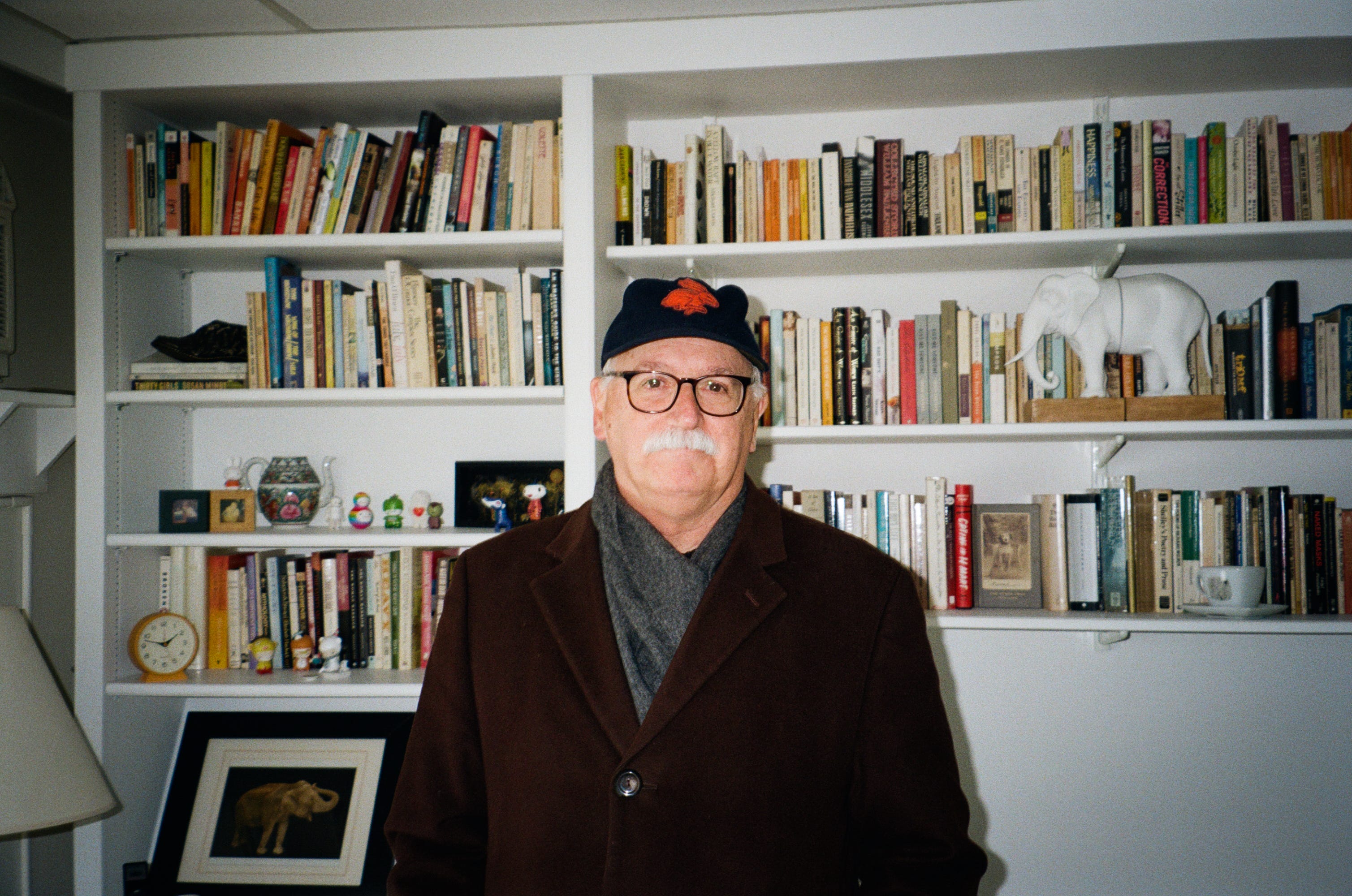
But let’s not go there. Let’s instead go to February, a two-foot snowstorm on the horizon, a rental car, a drive to Williams College. Shepard is waiting for me outside of his wife’s office. He stands 6’2” (maybe 6’3”) and is built, as Hemingway referred to himself, like a natural heavyweight. We go into the office, we’re surrounded by books, and we have fallen into conversation right away. I take out the Sony voice recorder I’d purchased the night before. I hit the red button.
Non Grata
I have a few questions about your writing.
Jim Shepard
I’m ready.
NG
How do you make it so propulsive?
JS
When a reader is sitting down and going, “why am I reading this?” some of it might be the subject, some of it might be the beautiful language, but part of it is that something compelling is going on.
I talk to my students a lot about what I call rate of revelation : Are you always feeling like you’re learning something? What slows stuff down is when you feel the writer is either wallowing in one thing or indulging themselves in another, and you’re feeling like, I already know this, but you’re just giving me more of it.
As I’m writing and revising I’m thinking, what am I learning here? What am I getting here that I didn’t get before? Is everything justifying itself? And that means if it’s doing work similar to work that’s done elsewhere, I got to get rid of it.
That’s a version of Hemingway’s “shoot your darlings.” But it’s very hard because you did all that work to come up with this great shit, and it’s very hard to not say, well, throw it in, right? What a great detail. People will remember that detail. But for me, every one of these details has to emotionally justify itself, both in terms of the characters and the narrative. If it’s not, it has to go.
In the case of a story like “Sons of Liberty,” I might have five or six details that I really want to get in about how the tea looks when it hits the harbor water: vivid, wonderful images of what a shit-ton of tea in shallow water looks like. But you don’t get to do five of them. You only get to do one. And you only get to do it at the right spot because you’re trying to move the narrative forward. You’re moving everything forward with as much economy and drive as you can come up with. The metaphor you’re operating with is much more like a guerrilla action than a mass invasion.
NG
Did you consciously feel like you were developing a style as you started writing?
JS
For most writers, except for a certain kind of self-important horse’s ass, style operates the way George Saunders articulated it. You figure out what sort of things you can’t do, or don’t like to do, and what sort of things you do like to do, and that starts to become your style.
Saunders tells the story of being the one person in the Syracuse MFA program who everybody agreed was a very sweet guy, but was never going to make it. Every one of his stories was a disaster. He was good friends with one of the teachers, Toby Wolff , who really liked him. He’d be over there having meals, but even Wolff would be like, George… these stories… they’re just not very good. And he was in despair, was about to give up, and then thought, well, if I’m going to go down, I might as well do what I want to do. As he put it, if I’m going to go down, I might as well go down making some fart jokes. And so he started doing the kind of stories George Saunders writes.
When I was teaching I’d give students an exercise on narrative modes where you have to do a scene in one mode only. So you have to do one scene in just dialogue, one in just exposition, one in just description, one in just action. And instantly people go: I really take to action, I hate description. Instantly they figure out what they like doing.
One of the cool things about the exercise is that they have to get me the same information. So if you want to tell me that Arjun is obsessed with his mom, you have to do that in action, you have to do that in dialogue, you have to do that in exposition. Obviously for most everybody some are much easier than others.
NG
Where does the subject matter for your stories come from?
JS
I began by trying to be a naturalist writer who would write about my own little niche, which was Bridgeport, ConnecticutItalians, who I thought were kind of entertaining. And it felt like, Okay, this is all you know, this is all you can write. And a lot of people are not gonna be interested in it, and that’s fair, because who would be, right?
Going to Brown and working with John Hawkes was a huge boon for me because he didn’t tell me, “Don’t write that.” He was just clearly bored by it. What he modeled for me was not, hey, go write something else. What he modeled was, whenever I got weird at all, he would jump on that. This moment is amazing, this is so weird. And I was like, “Oh, yeah, it is kind of weird, isn’t it?” Because we’re all so certain of our own normality, right? He was very useful at reminding me to valorize the weirdness, because that was the only hope I had of being original. And I was genuinely weird enough that I could do that, which turned me towards stuff that interested me.
So I’d be like, well, I’m interested in tsunamis. How am I going to write about a tsunami? I didn’t experience a tsunami. So then you’re thinking, how do you write anything that has any kind of authenticity to it at all?
It’s two steps: One is, why don’t you learn something about fucking tsunamis? The other is, and this is the really crucial thing, why does this matter to you? If you can’t figure the latter thing out, then you might as well be writing nonfiction about tsunamis.
That was a crucial step for me. I gave myself permission to go to other worlds, but then I had to go, why would anybody, other than an obsessed ten-year-old boy, care about this world? Why is this important? Because it isn’t enough to go, well, it’s just objectively a good story, isn’t it?
In terms of that propulsiveness, I’m always thinking what can I do to make this even more streamlined. I had a story last summer in the New Yorker called the “Queen of Bad Influences.” It’s about a pair of women in 1915 who are clearly drawn to one another. They’re both lonely and they think, God I never thought anybody like you would be in the world. And they’re both so inhibited by the world they’re in that they’re like, What’s the parameters of this? I guess we can have lunch.
I was planning this whole story out where you’d watch the track of this relationship developing, and then I thought that it’s gonna end in some catastrophic way. Maybe they’d be on the Lusitania. What I’m doing at that last point is trying to engage that ten-year-old boy. I’m trying to convince myself that I’m sitting down to have fun at the desk, which is hard to do. But if I’m going, hey, you’re reading and writing about the Lusitania, cool. I want to learn more. So then I’m saying, wow, and that’s leading me to emotion as opposed to the opposite. So then I’m writing a story and I have this plan. We’re going to unfold this relationship in all of its complexity, and then we’re going to have this disaster happen.
I get about five pages in and I’m like, you know what? I’m putting her right in the water. The relationship seems to be starting to develop and bang, she’s in the water. The ship is already sinking. Suddenly you realize, if you’ve been doing it for a while, that the reader appreciates that so much. Oh my God, I thought we were going to have to do five more chapters before we got to this inevitable event, and now you’re just there. That’s such a relief.
NG
When you’re talking about the ten-year-old boy, I think of “Pleasure Boating in Lituya Bay.” Just the fact that there was once a wave, 1720 feet, bigger than the Empire State Building.
JS
When I was about ten, I read that narrative, because that really happened to that father and son. For years I thought I would like to tell that story. But for me, as I said before, the question is, how is this relevant to anybody who’s not ten-year-old Jim Shepard ? How is this relevant in any way that’s not just, well, cool, that’s the biggest wave ever, right? That usually takes some teasing out.
A lot of literature is interested in that giant gap that exists between who we are at our best and who we are most of the time. A lot of my stories are about using moments like Lituya Bay or the sinking of the Lusitania to put as much light on that gap as I can. And also to suggest that we often think that we’ll be in control of the amount of time we have to shrink that gap. So maybe I feel like there’s all sorts of ways in which I’ve let Arjun down, but he’s young, I’m not that old, we’ll figure something out, right? Catastrophe has a way of going, You’re out of time. You didn’t move quickly enough. It has a way of reminding us that the world is not on our schedule, that the world is on its own schedule, that, as one writer memorably put it, history is about to be let off the leash and you’re in the way.
NG
Do you ever feel like historical fiction doesn’t get enough respect in literature?
JS
Historical fiction was a non-literary ghetto, like horror. But one of the good things about the diversifying of our tastes is that all of those genres can now be literary. So you have Kelly Link and Karen Russell can do Vampires in the Lemon Grove.
Literary historical fiction is fiction, not history, not nonfiction. Implicitly or explicitly, it is trying to answer the question you have when you’re reading a story about Gettysburg: Why should I give a shit about this right now? What does this have to do with anything that I should care about now? So if you read “The Sons of Liberty” and said, well, I just thought it was a really good evocation of what it was like to be in Boston at that time, I’m like, great. If you said, that’s all it was, I’d be a little disappointed.
There are moments in there that are a little more explicit than others. When you have a character in 1774 say that one half of the country can’t talk to the other half anymore, you think, oh, okay, so there’s a reason this is sticking in your head now. There’s a reason you wanted to write about this moment, as opposed to the French and Indian War, right? That helps address the issue I’m trying never to lose sight of: Why is this interesting to anyone other than nerds who are devoted to this subject? Because I’ll hear from them. You know, they’ll be like, actually it was an earlier day, blah, blah, blah.
NG
What do you think about auto-fiction?
JS
A lot of literary readers valorize it because there’s a sense that it’s getting really close to the bone, and that’s what literature should do, right? You have a certain kind of reader that thinks it’s more literary than “The Sons of Liberty” because, in “The Sons of Liberty,” the guy is clearly using his imagination. Auto-fiction is bulletins from the front. This is the real shit.
When I was at Bread Loaf, the writers’ conference, with Tim O’Brien, he was debuting The Things They Carried. It was blowing people away, partially because it seemed so terrifyingly honest. The last story in that collection is called “How to Tell a True War Story.” It’s this agonizing story about a little daughter grilling her dad about the awful things he did in Vietnam. After the reading, people would come up to Tim with tears in their eyes, and they would go, what do you say to your daughter now? And Tim would go, I don’t have a daughter. And he would get kudos coming and going, because before they asked him, they thought he was so brave to put down what really happened to him. And after, they were like, Wow, he persuaded me so fully. He’s such a good fiction writer that I was completely convinced. He is a really good fiction writer, but part of what he’s done is mobilize this fallacy, this tendency, that people have to think, if the story seems to align with what they know or suspect of an author’s biography: I bet that really happened. So if I set a story in Bridgeport about Italians, people are like, well, this is probably exactly what happened. And if I set a story in Lituya Bay, I could have something that literally happened to me and put it in there and they’re like, oh, good imagination. So you have those options.
In global terms, people are being wildly celebrated for flamboyantly not going beyond their experience. People like Knausgaard will intricately and eloquently explicate, here’s how I shaved, here’s how I went downstairs, here’s what I thought about my morning. It has to be artful, obviously, or people will be bored out of their skulls. But part of the authority is people going, Wow, this is so vulnerable, this is so honest, right? But it’s artifice, it’s construction.
The writing advice I got that was better than write what you know was a version of write what you didn’t know you didn’t know. Teach yourself something as you’re going along. When I started out at first I thought we were supposed to aspire to write what you know, here’s a story we can learn from, that sort of thing. But that has the sense that I already understand where I’m going before I get there. And that’s always a fatal problem in fiction.
NG
Do you outline?
JS
Always for novels and for the research-heavy stories. I have to do that in order to organize the information I have. But it only works because I register how contingent and how fraudulent it is. I put that map in front of me so that I can tell myself I know what I’m doing. But if I go far enough into that map and I haven’t changed anything important, then I know something’s very, very wrong.
That map is just there to reassure me that I’m not entirely lost. If I don’t start varying it pretty quickly, that means I’m not learning anything, and that means I’m just declaiming. I’m just going: Here’s my design. And the best and most intricate design I’ve ever come up with wasn’t nearly intricate enough. It always had to be just a starting point.
The designs that I’ve come up with, the designs that I’m able to look back on now, once I’ve finished up, are wonderfully complicated sometimes, and they were not what I started with at all. When I taught literature I wouldn’t teach something like “The Dead” or Lolita right away, because if you think that’s what you have to produce in terms of design in order to get going, you’ll shoot yourself in the head, right? Because you can’t do that.
It’s hard to remember that Joyce and Nabokov are doing that not with their initial designs but with ten, twelve, fifteen, twenty revisions as they’re starting to pick up the pattern. They’re going, Oh, this will be even more spectacularly intricate if I move this over here and get rid of that. Because now I’m starting to see what I’ve been doing. And now I can rearrange it more. But you have to start with something.
NG
Why do many of your stories focus on alienated adolescents?
JS
I don’t think we get very far from our obsessions and our sense of, as I was saying before, that gap between who we are at our best and who we are at our worst. In those adolescents are versions of me in all sorts of both real and imagined situations. There’s a million things that you are concerned with in theory, but there’s probably five or six that you keep coming back to in practice.
That’s an interest that you should register because it’s obsessive, and it means you haven’t figured it out yet. You’re still working on it. That dynamism is part of what animates fiction, as opposed to, I have wisdom and I’m going to pass it on to you: Don’t be isolated as an adolescent. I do tend to write about isolated and frustrated figures, and I also tend to write about relationships. My sense is that isolation can be compromised in all sorts of wonderful ways, and it’s problematized in all sorts of wonderful ways as well. I do write a lot about women protagonists as well, but some of the obsessions stay the same.
NG
Does it feel harder to write about female protagonists?
