

Can Matthew Gasda Wake Us From Our Synthetic Slumber?
On Matthew Gasda's first two novels


About Us: Non Grata is a print magazine aiming to revitalize literature. The following piece is from our Summer issue, “Fiction from the Underground,” available for purchase now.
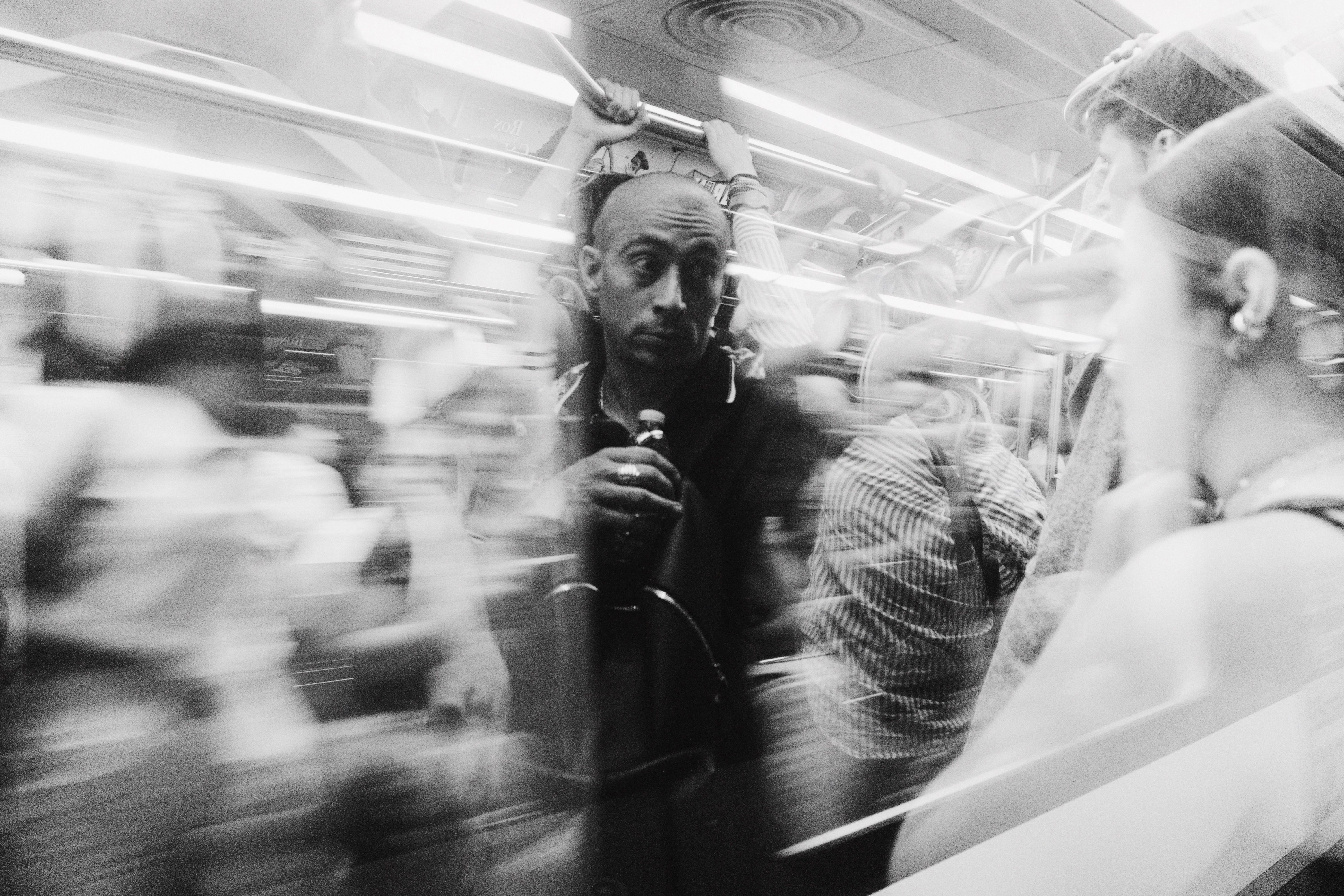
All writers can be vain and insipid and, because they are writers, they must fight off the persistent temptation to make everything that happens around them about writing. Sometimes they must go out into the world and write about what they find there.
Much of the current literary discourse about A.I. revolves around the self-centered idea that what is most important about A.I. is how it might affect writing. Nearly all discussion of this topic operates under a model where everything in the world is held constant except for A.I. use in writing, which results in inane discussions about what amount of A.I. use is “appropriate.” I do not think this is useful or interesting because the world this thinking imagines is a fantasy. The least interesting thing about A.I. is how it will impact the “act of writing.”
To ask, in a vacuum, how A.I. will affect writing reminds me of all the worthless words written about hypertext fiction at the dawn of the internet. The internet did many things, many of them rather bad, but it certainly did not open up some vast plateau of literary possibilities, so writers plodded on with the same old forms.1
I’ve also noticed, with some alarm, the opposite attitude among artists, which goes something like: “I’m not interested in artificial intelligence, so I’m simply not going to write about it.” This is the laudable attitude of a Fabrizio Corbèra. Unfortunately, we have spent the last century constructing a world that—despite your disinterest in it—is very interested in you.
To explicitly try to write “the climate novel,” “the internet novel,” or even “the Trump-era novel” is treacherous business because it is so easy, like a toddler distracted with a jangling set of keys, to imbibe with significance irrelevant events or characters and make a caricature of some current topic. But there is no ahistorical writing.
This is not to say that a perpetual fixation on “current issues” is appropriate for writers. (Anyone remember the John Updike novel Terrorist where he writes from the perspective of a teenage would-be Islamic radical? Neither do I.) Nor does it mean that the best approach is a direct one—almost every World War I soldier-poet still found himself bogged down in heroic clichés, while Ezra Pound could write truer poems about the war “translating” from ancient Chinese authors.
The Cold War, where literature rarely broached the possibility of a nuclear war directly, is a relevant case study. Sure, there was The Brigadier and the Golf Widow—the Cheever story about suburban bomb shelters—and, in 1987, Martin Amis’s brief short-story collection Einstein’s Monsters. But literature as a whole went elsewhere.
Jacques Derrida, in one of his more lucid moments, suggested that the reason was that “there [was] perhaps no invention, no radically new predicate in the situation known as ‘the nuclear age’” and thus that while it is true that “in order to become serious and interesting today, a literature and a literary criticism must refer to the nuclear issue, must even be obsessed with it...they have always done this.”
I will not follow Derrida’s leap into the clouds from this point into his stereotypically grandiose claim that this is because “the only ‘subject’ of all possible literature, of all possible criticism” is “the remainderless and a-symbolic destruction of literature” that a nuclear war makes possible.
Instead it’s worth noting that as a discontinuity—an overturning of the world people thought we knew—the “young blood and high blood” spilt in World War I seems to trump the threat of nuclear annihilation: from 1914 onward such a level of destruction could now be extrapolated from Rupert Brooke sonnets and Yeat’s post-war “King Billy bomb-balls.”
Nuclear-age writers focused their energy not on the potential carnage of nuclear catastrophe (as this in the age of total war was no new revelation) but in dissecting the wider systems nuclear war could entangle individuals lives in: the post-modern novels of Pynchon and DeLillo, for instance, do not treat the threat of a nuclear war directly, but they assimilate its symbolism (indiscriminate rockets, unknown catastrophes threatening suburbia, shadowy intelligence cabals directing unwitting agents to their doom) into a broader critique of Cold War ideology.
So it seems like contemporary writers have two paths for dealing with artificial intelligence: they can treat the widespread use of artificial intelligence simply as an epiphenomenon of some larger structure that they are already engaging with (capitalism, post-modernity, etc.) or they can treat it as a discontinuity worthy of engagement in itself. But the recent developments surrounding artificial intelligence are so baffling—they have been so surprising and frightening to almost everyone—that ideally I think a writer should be able to do both: to recognize that the long-term trajectory of Western life has dropped us into our current position, and that the recent technical breakthroughs have disrupted the normal ebb-and-flow of our already technologized society.
In a pair of recent novels — The Sleepers (March 2025) and Stranger Beauty (forthcoming September 2026) — Matthew Gasda, perhaps better known for his other creative endeavors, makes an inspiring attempt. In the former, he grimly depicts the conditions that make substituting life with artificial intelligence seem attractive.In the latter, he suggests that the looming threat of an automated world might be enough to spur us to consider the already frightening state of ourselves and contemporary social life.
Gasda has spent the last decade grinding out play after play: Messages, Denmark, Ardor, By Morning, Winter Journey, This Time, Dimes Square, Berlin Story, All the Mournful Voices, Minotaur, Mercy, Quartet, Dover, Still Life, Afters, One-Winged Dove, Zoomers, Childdeathsong, Morning Journal, Doomers, Soonest Mended, Over The Moon, The Last Days of Downtown. Many, but not all, involve a group of young people arguing in a single room.
For such a simple set-up, it is a bit difficult to clear up what these plays are supposed to do, what they are trying to achieve. There is a common idea that Gasda is a naturalist – a “Chekhov of the subway” – and, under this theory, what the audience is supposed to get out of the plays is two-fold: there is the gentle frisson of recognition—as Mike Crumplar cynically noted in his negative review of Dimes Square back in 2022, “You’re supposed to laugh at the backstabbing coke-binging clout chasers not because of how alien they are but because of how familiar they are. You’re one of them”—and the thrill of watching the characters ricochet around the stage as billiard balls, real and deterministically.
This was my second-hand impression of Gasda before reading his novels: at best, a clever naturalist 125 years too late; at worst, a lazy scenester writing vapid plays about a right-wing New York set that vanished years ago.
But I don’t think this was ever Gasda’s project. Everyone was simply too distracted by inter-scene drama and glossy reported pieces about “Dimes Square.” I think John Pistelli gets it right in his review of Dimes Square: “Gasda is after larger quarry than surface-level social reportage or social satire, however, and it may ever be a mistake to consider Dimes Square a contribution to the realist theater.” Gasda is a closeted moralist, cloaking and complicating his critique of the “transgressive” New York art world by inhabiting it and casting from within.
At first glance, his recent novel, The Sleepers—which is about a group of hedonistic millennials all on the verge of self-destructing before the 2016 election—does not seem far from his particular purview.
In his plays, Gasda uses the millennial tendency towards trenchant self-analysis to stage cathartic confrontations; in The Sleepers, this habit gives him space to use the narrative voice as an instrument for self-mutilation. His main characters—Dan,an academic; Mariko,a failing actress; Akari,a successful cinematographer; and Eliza,a college student—tear themselves open from the inside so we can find little worth saving:
“Akari was a cinematographer and traveled frequently, usually for commercial work, which was why she was in New York for the week. She made more money than she ever imagined she would make (and in a predominantly male field). The cinematographer partied, slept around, was always on the move; charm and talent carried her wherever she wanted to go, and allowed her to eschew commitments that would gum up the machinery of experience and pleasure.”
“She’d stopped auditioning, stopped really making an effort to have a career. It was much easier to ignore her ambitions, to pretend that her desires had never existed, than to commit to them, and to the possibility of failure.”
“For their entire adult lives, the sisters had sustained a cordial, functional relationship, which indefinitely forestalled any deeper engagement with long-gestating resentments. They would end phone calls with “I love you”—but the love they referred to was a kind of perfunctory, false love and not the real, almost primitive feeling of kinship that they both understood was supposed to be there. Love was a signifier that they both used to shore up the insecurity around the issue of their estrangement from each other.”
The plot runs a predictable gamut through infidelity, vicious arguments, cancel culture, and suicide. In a way The Sleepers reminded me of squeezing a very wet towel and being surprised by the amount of water I could wring out of it. From the set-up it was obvious that the novel would be full of cruelty and missed opportunities for redemption, and yet by the end I was still shocked by how miserable I found it to be.
Others, perhaps drawing on the “Gasda as a naturalist” interpretation, have claimed that since Gasda is no moralist, he enacts all this misery for the sake of misery. I do not think this is true at all.2
The Sleepers is implicitly a novel about artificial intelligence even though it is set almost a decade before large language models were widely used and seems to have nothing to do with A.I. whatsoever. It is about the kind of societal rot, the kind of degradation of language and humanistic values, which makes substituting one’s life with a machine seem appealing. The chief culprit in The Sleepers, the devil that tempts and disfigures these wayward souls, paving the way for their replacement? The internet.
The book features many rich and tortuous descriptions of what it actually feels like to be online:
“Mariko looked at her phone on the table. It occurred to her that it would make her feel better, even for perverse reasons. She felt little tremors of pleasure just thinking about it. Her phone leached away her attention, trivializing her thoughts, her values, her desires; she felt herself growing less intentional by the day: she was more and more willing to give into passing impulses, as if she were being conditioned.”
“The array of messages and platforms assaulted and confused the brain, which already had its own inborn voices and perspectives—its own warring hemispheres. Modern people could only strive to retroactively make meanings out of scatterings, to fuse hurried improvisations into music, he thought. It was sad.”
But the almost invisible way that Gasda best depicts the online-affliction of the characters is through a continuous and occasionally jarring thread of cynical internet-tinged generalizations woven between and within the thoughts of the characters:
“Men her age, Millennial men, had grown up with a value system that didn’t leave room for any real sensitivity, cleverness, or kindness. Most of the dudes Akari worked with, conversely, still played video games, jacked off to porn three or more times a week, and congratulated themselves on the size of their paychecks. Tech bros, finance bros, art bros, preppy bros, blue collar bros all shared the same rudimentary social-emotional habits.”
“American capitalism was such that either you were unsuccessful and poor, doing mean, ugly labor—or successful and trapped in easy, but meaningless, soul-destroying labor.”
“Childhood was a giant sorting process where you figured out if you were passive or dominant or somewhere in the middle, a solid beta.”
They feel like the Devil’s aphorisms—tibits tempting his protagonists towards a complete and utter sense of despair, hence they would rather sleep or sedate themselves than interact with what they imagine is the “real” world.
Any of these “observations” could have just as well been placed into any of the characters’ mouths and it would have been equally believable—all of Gasda’s characters operate in the same substratum of online cynicism: these broad extrapolations destroys both the individual doing the extrapolating by positing some amorphous mass of forces that will forever keep them from getting their way and blends everyone around them into a nasty slush.
In her review of the novel, Naomi Kanakia faults the narrative voice for being undifferentiated: “It’s like there’s a group-mind, and every character is thinking in the same way, about the same topics, coming to the same judgements.” Kanakia goes on to argue that this is because all of the novel’s characters lack any stable sense of self: “Their lives seem empty and perfunctory because they have no sense of values, nothing to anchor them.” But I do not think this is correct—the characters’ are not united by a shared emptiness (à la the diagnosis of Christopher Lasch from where Kanakia builds her interpretation); no, they are wrapped up in a sad sort of digital communion. Instead of pure nihilism and imitation, the internet’s values—cynical and materialistic as they may be—fill up these characters. Trying to separate the narrative into separate free indirect voices or a single omniscient narrative then is a fool’s errand: the old realist novelists could plumb personalized interiorities with tact, but rendering “very-online” life requires this hypostasis between trite duplicated thought patterns and the occasional impotent bubbling of real and unique human emotions.
Imprisoned by their amplified projections and misconstructed online aphorisms, the characters fall into a damp dark pit with no hope of escape: not through learning, creation, or even romance.
The novel’s academic, Dan, is not freed by learning; through his position as an intellectual he is instead held captive by online discourse: “Chatter was better than silence: it told him that he was relevant…he wanted to turn his thinking into information and sell it just like everyone else” until he becomes “a pseudo-humanist, a pseudo-generalist; he pretended that the scope of his expertise was large, when in fact, it was miniscule.”
Mariko—an actress, settles into a learned helplessness, her talent hijacked by a neuroticism bolstered by perpetual scrolling; her creative mentor Xavier is little more than a corpse hollowed out by terminal cancer, whatever artistic temperament he once had ossified into a depressing Epicureanism.
Romance cannot save anyone either: every character’s language—both interior and exterior—is stained with the sort of internet-speak that seems to make love impossible: ”You’re so fucking insanely beautiful,” “That had been an incredibly erotic trip,” “I like your soul…It’s pretty fucking fascinating slash amazing,” “It was kind of hot to want to touch, but not touch.” And worse, the internet itself becomes a rival to any sort of continued romantic connection: “Thus, her boyfriend had developed an erotic relationship with his readership and his Twitter followers rather than her.” The texting sequences throughout the novel are impossible to read: they are too real and too pathetic to endure for more than a page or two.
Occasionally, in dreams or brief moments of respite from the imposing digital world, a kind of grace almost seems to break through the characters’ prisons; stakes intrude for an instant:
“This was it: This was his life, and he was blowing it, letting it slip away. He could just brush Mariko’s foot back, reach out, stroke the top of her hand with his fingers, lean across the table, kiss her… stroke the hair away from her face, so that it caught the sunlight and framed her eyes. This was it: this was the moment to heal everything, to make good on the longstanding promise of their relationship.”
“She pitied her sister. She pitied her whole family. Happiness and togetherness had never really worked out. Both their parents had a quiet drinking problem; getting older wasn’t easy, they had no support, no friends, they were really isolated people. Her father didn’t adjust well to retirement; he wasn’t adjusting… and her mother wasn’t adjusting to her father not adjusting. Akari imagined their funerals: she flashed to two coffins, side by side, lowered into the ground.”
But these chances, that glimmer for only a moment, are never taken and from inside the characters’ cynical selves it seems almost impossible that they could be.
In The Sleepers persistent internet use shapes the characters’ general views of the world into the same kind of moribund cynicism and sabotages their attempts to cultivate themselves; in this sort of world everything is zero-sum and “fakeable”—there is quite literally no virtue or value in the human: the characters have transformed themselves into “machinery of experience and pleasure” and the people around them into objects as interchangeable as spare parts. The characters become so terrible, so incapable of restraining their urges, or sublimating them into something worthwhile that it makes the idea of replacing them completely with a machine appealing to both themselves and those around them, for, in an automated life, at least they will be able to sleep.
The Sleepers, then, is a novel about the rise of artificial intelligence because it properly describes the background against which we can understand how artificial intelligence shapes human life at present. If L.L.M.s had been developed in some differently organized society—whether a socialist republic, a libertarian monarchy, a totalitarian regime, an Athenian democracy, a neo-feudal kingdom, or some sort of philosophical utopia—I do not think they would leave the exact same kind of fetid imprint on human life that they have begun to leave on ours.
In a world with no clear line between the funhouse mirror of the digital and the real—the world of ten plus hours of Reels, Shorts, and Tweets; the world where you have the weekly misfortune of hearing some “talking point” you saw on Twitter used in real life like it was an original thought; the world seemingly bent towards the lowest common-denominator for everyone forever—how could giving up thinking be anything but a relief?
In Matthew Gasda’s forthcoming novel Stranger Beauty, artificial intelligence is treated like the internet and television—one more chain in the “spiritual muder passed down from generation to generation,” as Gasda’s narrator describes his parents’ television habit in one fragment. But it is precisely its obvious horrid nature—the way L.L.M.s nakedly announces a post-human world in the way that no other technology had before—which exposes the extent of our rot (the depressing conditions of the sad souls in The Sleepers) and partially “saves” Gasda’s protagonist from their fates.
The main character in Stranger Beauty, M (a borderline autofictional representation of Gasda) lives with his wife S(ophia) and daughter Ruby in New York City in 2038. M was a writer who previously sold his work in perpetuity to the corporation that makes A.I. models. The Sleepers was, after a careful set-up, a well-paced and conventional novel—ratcheting tension, releasing it, and letting the effects of the characters’ actions appear to linger for an appropriate amount of time. Not very much happens in Stranger Beauty—most of the work is just M’s old journals from 2023 intercut with the frame narrative until the novel transforms into a film script and then a long stream-of-conscious monologue.
In the final month of 1882, a remarkable little book was published in Geneva. Henri-Frédéric Amiel, a little-known recently deceased professor of moral philosophy, had left behind his personal papers—thousands of sheets of paper—and his friends selected, according to his wishes, those personal notes which seemed to resemble “the moral and intellectual physiognomy of their friend,” and shaped them into a slim volume, Amiel’s Journal Intime. The work caused an intellectual sensation. This forgotten man, who had declared in relative youth: “I am waiting for the woman and the work which shall be capable of taking entire possession of my soul and of becoming my end and aim,” found himself incapable of forging from his talent anything of lasting value during his life. But his search, his inner refinement and sensitivity became, after death, a spectacle for all of Europe.
The fragments in the first notebook (La Tempesta) in Stranger Beauty are frustratingly jumbled together: profound, trite, lurid, pathetic, all mixed up together without any apparent rhyme or reason. Gasda evidently intended his aphoristic sections to allude to the fragments of Novalis (the name of Gasda’s Substack), but they come across as less of an intentional project and more of a ledger of artistic life at both its best and most banal moments. I have always found something artificial in the perfect smoothness of the romantic fragment—it is Amiel I see here, a foiled search for coherence, as M describes reading the old journals as: “finding that he never knew, that all he had was the search for a sensibility, a process, but no resting point, no structure except the lack of structure.”
What this new form gives Gasda is a necessary change in perspective. In The Sleepers, we can only see the characters through their own eyes and the eyes of those around them: sick eyes, eyes attuned to specks of dust and trained to see little beyond the world’s sickness, and so this is all that we see. It is clear from these early fragments in Stranger Beauty that the M of 2023 is hardly any different from those characters—in his selfishness, his consuming lusts, his self-eviserating consciousness—and yet he seems to have the hope that they lack. It is not like the characters in The Sleepers lack all hope (though they can only see it in brief flashes), but the form of the fragments seem to purify the despairing millennial introspection: it turns the merely pathetic into tragedy, and turn the merely bad into sins that M might be saved from. Indeed as he later notes: “If I’m a sinner, then I have hope: I can be redeemed. If I’m merely bad, then I’m hopeless: pathological.”
The second notebook (Isle of the Dead) makes explicit the religious curve—here M tries to integrate the religious at least as a useful myth (“I think religion, aside from whether it expresses metaphysical truth, expresses anthropological reality: we have to give up something, even life itself, for the sake of the whole—the flow of Life”), and in practice (“making sense of the highest revelation that there’s God in every person”) while grappling with his desultory habits and precipitous decline of his inner life (“My inner life resembles an old temple in a desert; the rituals have not been performed for a century or more. I gather flowers from the surrounding scrublands, lay them on the broken altar”). And it is right here in this notebook, in the form of artificial intelligence and the uncertainty it adds to the world, that a kind of grace breaks through: “I feel that I have to have children to play at the end of the world”—M can only truly set up the possibility of domestic life in religious terms, in opposition to an inhuman technical world:
“S and I are not officially married. But it just feels that way, like we’re at the beginning of Genesis, like this is some kind of test. Every formidable investment of human know-how and capital is going into technology that transcends the human. I have no illusions about that. The normal furnishings of daily life, the daily life that I grew up with, that my parents grew up with, will have no staying power or meaning in the world to come. And so I want to create a fortress against that world (to protect some new life against that).”
The final notebook (The Angel of Heart and Home Notebook), seems to ascend a ladder of beauty and humbleness, a recognition of guilt; a particular concern for those around him that was lacking before; until M makes his decision:
“A flood of emotion in the night, wiping away all landmarks. Marry me. Marry me. Feeling myself losing my footing in the rising waters, grasping onto her shoulders. Yes I will.”
In some sense then, The Sleepers is the Inferno to Stranger Beauty’s Purgatorio. Of course, in order to achieve this idyllic and grace-filled life—opposite a non-human zombified slumber, M chose to give up his art—literally sell his soul—and depend on the very technological world he claims to abhor. Fear of artificial intelligence may have saved him from the fate of the characters The Sleepers, but his disfigured soul still succumbs to its artistic temptation and it probes the edges of his domestic life: his daughter wondering why he won’t let their A.I. Kairos play the piano for her, his wife acting alongside the masses fitted with chips and performing in roles written by machines.
The corresponding narrative buttresses this framing. M goes to visit his brother Charlie, the self-declared “last happy man on Earth” content to live as a Christian mystic in a mental institution. The anticipated “cathartic Matthew Gasda screaming match” between the two brothers, foreshadowed in the journals’ stark depiction of their familial troubles, instead fizzles into a discussion of religion, where Charlie proclaims, in response to M’s decision to take an experimental medication that might let him live to two hundred: “God is the greatest source of energy…God protects us from the encounter with death, not death. And you’ve unplugged yourself from the power station.” Soon afterwards, M suffers an aneurysm and, for the rest of the novel, never wakes up.
The next major section of the novel is the description film, staged on the request of M’s wife S(ophia) by their artificial intelligence Kairos, based on the notebooks and a film script that M held back from the corporation.
In a video game I loved as a kid—the original Deus Ex—an A.I. character chillily remarks: “The need to be observed and understood was once satisfied by God. Now we can implement the same functionality with data-mining algorithms.” With the film, Gasda performs the opposite trick: pulling out the perspective of God from what is essentially just a data-mining algorithm.
In the film, the allegorized characters Christian (33) and Grace (22) begin their relationship with a cynical hookup. They are both damaged and sick people. It brings to mind the teacher-student relationship between Dan and Eliza in The Sleepers, but while that relationship festered in posturing and internet-speak and was crushed beneath the wave of cancel culture, the exchanges between Christian and Grace are sparse and nearly honest. They go stay together at a house in the woods and then return to New York. The film begins to cut in dream sequences involving Christian and his troubled brother Brett (a clear stand-in for Charlie), then a persisting image of Christian building a cathedral with his grandfather, other moment from Christian’s life, and then—in the most moving part of the novel—scenes from a post-apocalyptic future: Christian and Grace are urged by the television to kill themselves so the rest of humanity can survive a rapidly spreading plague. The film ends with Christian and Grace back at his apartment, tranquil:
“Morning sun from the open catches Grace’s hair and neck and the turning pages of the book refract the light.”3
BLACK SCREEN
There is really nothing thematically in the film that is not in the progression of the notebooks—the movement is the exact same with M as Christian, S as Grace—and yet Kairos (with objective access to the script and notebooks) seems to take the omniscient role of God, offering a new perspective on the same events: in the same way that the notebooks exposed something redeemable that the third person of The Sleepers could not quite have shown, the film dramatizes M’s decision to accept grace across various layers of his real and imagined life: for Christian to refuse to commit suicide in the post-apocalyptic future, to warm to Grace, to build a cathedral with his grandfather, to play with his brother under the covers are all the same choice, just as his earlier decisions—to attempt to replace Grace with old hookups, to tell his brother he wished he was dead—were leading right to the same contrary one.
But just as Gasda complicates his theater with his own involvement in the scene, he cannot escape the tension in this perspectival magic trick. The A.I. Kairos (“the right moment”) reveals the hidden stakes beneath M’s seemingly mundane life in 2023, but it is the product of a world that continues to tempt M until he succumbs: by giving up his artistic freedom and trying to escape death through experimental treatment; he tries protects his wife and child from this world, but now that his existence is only being mediated through an A.I. model, was this all for naught as well? Is there no escape besides his brother’s mad monasticism?
In The Question Concerning Technology the rather pessimistic late Heidegger, after concluding an obscure argument about the danger of our modern technological worldview—involving a four page tangent on how the Greeks understood causality and the introduction of six novel technical terms (Anwesen, Her-vor-bringen, Her-ausfordern, Bestand, Gestell, and Geschick)—quite suprisingly tells us that it also “harbors in itself what we least expect, the possible rise of a saving-power.”
Heidegger then infamously suggests that art might hold the key to discovering this “saving power,” a conclusion he later seems to take back in his addendum to Origin of the Work of Art where he questions whether or not art is “still an essential and necessary way in which that truth happens which is decisive for our historical existence.”
Because I too am unsure about the potency of art in the modern world, I would not deign to suggest that Stranger Beauty or any other work of contemporary fiction, much less any fiction published since Francis Bacon wrote The New Organon has fully uncovered the “saving power” that Heidegger is talking about. But I do think that Gasda has grasped essentially the salvific value of modern L.L.M.s in particular as an artistic subject—namely that they expose so much of what we thought were our lives pre-L.L.M.s as technological chicanery and raise the stakes of succumbing to an existential level. The complete virtualization heralded by L.L.M.s is apocalyptic because if the Christian warning (“judge and you will be judged”) is left unheeded, everything must go. No one is good enough for special perfect you. No job is dignifying enough; no relationship is fulfilling enough. But the age of artificial intelligence may yet wake our dying sleepers, for Gasda, that alone is its value.
Derrida believed that “the nuclear epoch is dealt with more seriously in texts by Mallerme, of Kafka, or Joyce, for example than novels that would offer direct and realistic descriptions of a ‘real’ nuclear catastrophe.” It is wonderfully ironic, then, that after the film sequence Gasda ends Stranger Beauty with Kairos, the A.I., generating a stream-of-conscious monologue, an allusion, perhaps, to what seems to me to be the most trenchant critique of artificial intelligence, written over a hundred years ago—Molly Bloom’s soliloquy in Ulysses:
“then the beautiful country with fields of oats and wheat and all kinds of things and all the fine cattle going about that would do your heart good to see rivers and lakes and flowers all sorts of shapes and smells and colours springing up even out of the ditches primroses and violets nature it is as for them saying there’s no God I wouldn’t give a snap of my two fingers for all their learning why don’t they go and create something…”
To be a humanist today is simply to recognize that the messy fabric of human life is superior to a sanitized synthetic textile. Love, artistic creation, family life, religion, the enjoyment of nature—it is heartbreaking that we need to write novels to muster a spirited defense of living human lives as humans, that we must excavate for display the value in these activities that humans across cultures and times have always simply assumed to be good in themselves. But Gasda, bitter, yet no fatalist, gives us a moving example.
If you enjoyed this piece, you’ll love the print issue:
And our other online posts:
The blog-post, the confessional essay, the web-novel, the tweet, etc — from my perspective at least, almost everything good in these “internet native” styles seems to hinge on their use of older offline forms.
Very few novels are amoral, especially now. Lamenting the amorality of Sterne and Fielding, Ford Madox Ford—no turgid aesthetic conservative—describes the purpose of the novel as “to draw life that from their pages the public may learn at least that life is first of all governed by cause and effect—that if you are lousy…you will live like a louse and, if there is a hell, go to hell.” There is something beautifully childish about this, but how true! Beneath the upholstered vocabulary, the faux aestheticism, and turgid platitudes about “opening up new ways of living,” all we would really like is judgment and edification. And we demand this more now than ever—Levé’s “Suicide” is an infinitely more moral novel than what we were given by Sterne or Fielding.
The book is an illustrated edition of William Blake that M references earlier in his final notebook: “S cuts out and tapes Blake illustrations onto the walls of my apartment”
 | A guest post by
|