

On Writing No. 3
Novelist Beatriz Serrano


The following interview with Beatriz Serrano was conducted by Adam Pearson. It was originally published in our Summer issue, “Fiction from the Underground.” Forty copies are still available for purchase; we will not do another print run. Get yours today:
Who really knows what makes us pick up a new book? All those pastel covers laid geometrically on the front facing tables of Barnes and Noble. Each with bright colors, the pastel teals, purples, hot pinks, forest greens with garish font, each more ostentatious than the book beside it. Every designer of which had received some version of the same memo: make it stand out! It was September of 2025 when Andrew Boryga posted a Substack article that included a list of books he had recently purchased. Among them was a slim novel called Discontent by Beatriz Serrano. He hadn’t read it yet, simply saw it on the USA bestseller’s list and liked the description, and wanted to use it as “research” for a workplace novel he might one day write. I was at Barnes and Noble later that day to kill some time before meeting my girlfriend for dinner. There I saw the slim paperback sitting on that highly coveted front table among other pretty covers whose contents I’d read a few sentences of and put back down. Its beige and navy blue cover showing a woman folded between two chairs looked understated next to the other offerings on display. I picked up and just stood there in my corporate work clothes and unshaven face, looking like someone who got lost on his way to the History section, though not so well kempt as to have been seeking out Self Help/Business, and was absolutely absorbed in the plight of this modern day Bartleby, Marisa – a content creator at an advertising firm whose existential crisis is interfering with the false corporate persona that has enabled her to rise in the ranks and live a comfortable, consumerist life. The problem isn’t just that she hates her job, it’s that she hates all jobs. The frank but frequently funny portrait of modern life does away with the quirky millennialisms of your typical The Office inspired workplace novel, and leaves no illusions intact of the compromises we make to the soul in the name of being a member of modern society. Eventually I found out I was twenty five pages in, and twenty minutes late to dinner. I then finished the book in three days.
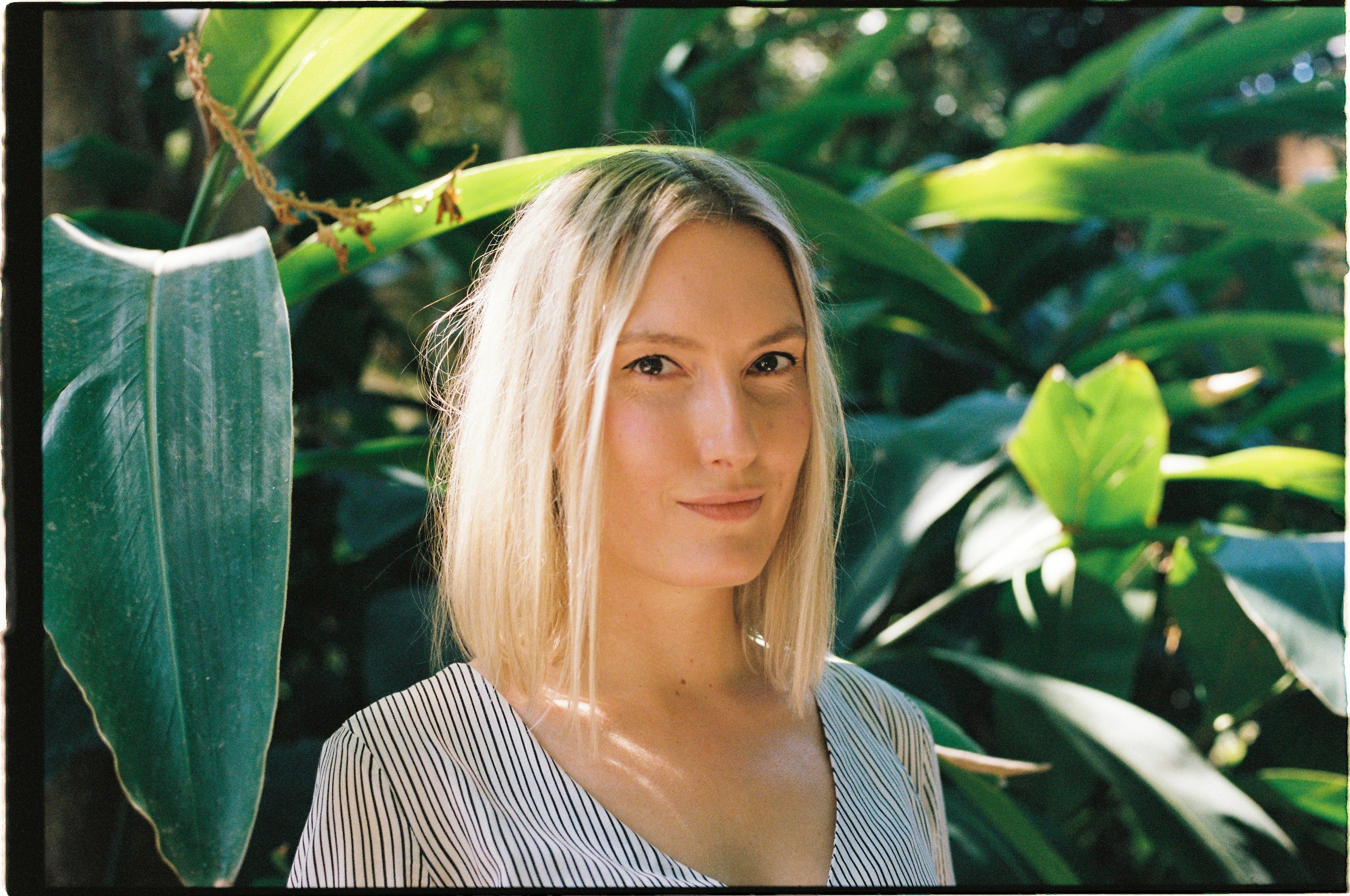
Though Discontent was Beatriz Serrano’s debut novel, she has had quite the illustrious career as a journalist, writing for such publications as Vanity Fair, GQ, Buzzfeed, Vogue, and Vanity Fair. Her most recent novel, Fuego en la Garganta, was a finalist for the highly prestigious Planeta Award. I was both nervous and thrilled when offered the chance to sit down and speak to this highly talented author. As I awkwardly tried to figure out a way to record our video call, the affable and more experienced Serrano gave a helpful suggestion: just use the voice memo app.
Non Grata: Much about literature in translation seems to be sold as a way of experiencing other cultures, but from so many recent books I’ve read, I get a sense that life has been more or less homogenized across the globe. When I was reading your book I said, well, yeah, this could have been me in Seattle as much as anyone in Madrid.
Beatriz Serrano: I have the same feeling. The cities where I set the books are so important, and Madrid (where Discontent is set) is rough right now.
NG: How so?
BS: The rent, it’s very rough. The rent is going higher and higher, the salaries are the same as they were ten years ago. It’s very complicated to live here. I have friends who sometimes have two jobs, which is very rare in Spain, because they can’t pay for their living expenses or they have to live in a way that a thirty-something should not have to. Marisa (the protagonist of Discontent) is kind of a unique person because she can live alone in her own apartment with a nice terrace in a nice neighborhood. But this is not quite normal here. The problem, I think, with the expats, and I don’t want to be mean because there are a lot of nice people in your country, but I think there are a lot of North Americans that have a very romantic idea of Spain. They come here and they see the country as a setup for their romantic fantasies. The same thing happened in Italy, and in Greece. It’s this kind of Hemingway fantasy. When Hemingway came to Spain and he was like, “Ooh, bullfighting,” I’ve never seen a bullfighting competition in my life. We are not all the time dancing flamenco, eating tapas, and living the Vicky Cristina Barcelona life. The siesta is very popular, but we have nine to five jobs, so we can’t sleep siesta every day. There are a lot of topics where they are mistaken. And I feel like at the end it’s like you said at the beginning, I think every city looks the same. It doesn’t matter if you go to Paris or London or Rome or Madrid or New York, you are going to find the same kind of places: the same hipster coffee shops and the same food in every country. So I think Discontent could be set in every other city, it just happens to be in Madrid. I think it’s a reflection that we are having the same problems in every country.
NG: What led you to this novel?
BS: There were a lot of signs around me. I had an advertising job at that time and I was not writing. I studied journalism, so before I always worked in magazines or newspapers, and this world was very strange for me. Everyone had a Stepford Wives kind of enthusiasm. You know, “Oh my god, we have this project!” and everything is “fantastic!” A very PR kind of culture. When I was working there I realized a lot of my friends were taking medication for depression or anxiety. And this was super normal. It was like, “Oh, are you feeling a bit nervous? Take a Xanax.” Everyone was complaining about their jobs. So this figure, Marisa, came to my mind. At the same time, I was reading a lot of books that were related to the Discontent universe, such as Mark Fisher’s Capitalist Realism or David Graeber’s Bullshit Jobs. We are part of a generation that was told we were going to be happy and fulfilled with these jobs. So the book came when I was thinking about all of these ideas and it was this point in my life when I was thinking, is this it? Is it going to be like this forever? Because this is horrible. I don’t want to repeat this for thirty years. For that, I started to create and think about this character who is perfect at her job, because she’s completely dissociated from her real identity, until something happens and she can’t fake it anymore. I started to build the story. I didn’t know where it was going to lead me. The first scene of the book is the first scene that I wrote. I was imagining a person entering a meeting. Like as an actress or an actor before coming to the States. So he’s out of character and then once he goes in, he’s in character like, “Oh my god, hi, yes, this is amazing!”
NG: One thing that I found fascinating about Marisa is that unlike similar characters like George Babbitt or Willy Loman in Death of a Salesman, her whole corporate persona seems more like something imposed on her than something that she created for herself.
BS: There is a quote from Joan Didion that I love. I don’t remember the exact quote, but it’s something like, “They are not living a life. They are living a lifestyle.” So Marisa is not living the proper life. She’s living a lifestyle that she’s portraying. You can see, when she explains how she ends up working in advertising, that it’s not an ambition. It’s not something that she wanted to do. But she has a choice between being happier or buying beautiful things. She chose the beautiful things and now she regrets it. But I think this explains the kind of trap that we are living in: working or dying from hunger. This is the choice we have. So, yes, Marisa knows that she has to do something, but she doesn’t have any ambition. We have been instructed since we were kids: What are you going to do when you grow up? What is your dream job? What do you want to do?
NG: The term “golden handcuffs” comes to mind. The idea that if we give up our materialism in favor of a simpler life, we’ll be happier. But yet, we always need to eat, we always need to pay rent, we’re always in some kind of handcuffs.
BS: I think it’s a trap. I don’t like this. You know, the idea that liberty or freedom comes when you don’t have any desire. I think it’s impossible for a human being to not have desires. But apart from that, I think that what we are talking about here is that if you have to pay a lot of money in rent, you need to work. It’s not that you were consuming a lot of things or that you were going to fancy restaurants whenever you want. For living, it’s very expensive. So you need to work. If you don’t have any desire and you don’t consume, you will be free. You will be a little bit more free than some people who are all day buying things on Instagram. But I don’t think you are totally free because you still need to pay for food and home. So, how? If you don’t have rich parents, it’s very difficult to be free.
[SPOILER ALERT — START]
NG: I was expecting the novel to go out with a “be careful what you wish for” type sentiment. It’s still a dark ending, but Marisa seems to end up in a place that’s more like: this is exactly what I wished for, and I’m fine with it.
BS: Yes, thank you. I have had doubts about this ending. I’m going to tell you why. First, well, I had a very clear idea. A person who is a driver of delivery companies is on the lowest chain of capitalism. I was having some doubts that Marisa is going to sound like someone who complains too much. I wanted her to have the bump of reality that comes from someone who is in a place that’s worse than hers. But then, when I was thinking about the ending of the book, I was like, is this kind of sad? I think in this society, you can have an individual salvation, but not a collective salvation. So what happens to Marisa is her happy ending. For me, it’s a happy ending. A lot of people told me, “Really?” But for her, it’s a happy ending.
NG: What it really got me thinking: if being slightly crippled is a happy ending because you now have to work two less decades of your life. What are we really giving up when we work for forty years?
BS: Well, would you give a part of your body to work for five years less?
NG: Five years less? No, not five years less. I need my limbs to write or do the other things work keeps from me. But Marissa, she didn’t have these grand creative aspirations that her work was holding her back from. She just wants to be a human being. She doesn’t want to be a striver.
BS: But I think this is the point. In my case, my dream since I was a kid was to be a writer, and I’m very happy with this. But I was working in places that were supposed to be kind of like my dream jobs, and in the end they don’t care if you live or if you die, as the Smiths song, which I call out in the beginning, says. In the end, you work with some people that are sometimes the worst. You don’t choose your colleagues, and sometimes you are liking your dream job, but you have to. You have some violence going there, people treating you badly, and you can’t say anything. Or bosses who call you at nine or ten o’clock. It’s easy for me to say, “But I always wanted to be a writer, so I chose this path,” but no one should have to deal with this kind of situation. With violence and with exploitation. It’s okay if your option B is just being quiet and enjoying life. I didn’t want Marisa to have that frustration. Like, “I want to be this, but I became that, and for that, I’m unhappy.” No, I chose this and I am happy because I just want to be quiet and because existing is enough. I don’t have to validate myself just because I’m an artist or because I have a lot of things to give to the world outside of my office time. It’s okay if you don’t. You can go to the cinema, or just be in the park. This is okay.
NG: I think a lesser novel would have tried to make Marisa an aspiring artist like its author. But you make Marisa an average person who just wants to exist.
BS: You know what changed my mind? Talking to older people. When talking with my mom, for example, in her sixties, it’s like, I just don’t want to work anymore. I just want to be in the garden with my plants. They were not programmed as our generation to have these ambitions. You realize that people just want to live.
[SPOILER ALERT — END]
NG: What are your opinions on autofiction?
BS: I like autofiction. I’m a big fan of Annie Erneaux or Emmanuel Carrère. I don’t know if Emmanuel Carrère is big in the States. For me, I like to write fiction. I like to explore the world through fiction. I don’t feel like I’m interesting enough to write about myself and put it out there. You have amazing people doing autofiction, Vivian Gornick, for example. I love her. She said she does personal journalism, but it’s basically the same. I think pure fiction gives you more ways to explore the world that we are living in than autofiction. And I think the problem with autofiction right now is that there are a lot of people obsessed with themselves: writing foreign books about themselves and I think it’s because they all want to be Annie Erneaux, but you can’t be Annie Erneaux. I think the problem with autofiction is basically the market once again, that they are telling very young authors, “Write about your trauma,” and it’s not necessary for everyone to write about their trauma. There is a point where I’m like, I don’t care about your trauma. I don’t want to read about your trauma. I’m so sorry.
NG: When you have to mine your own life for material, you eventually dig a dry well.
BS: And people talking about their drama or their trauma write the most boring stuff. I feel it’s also a reflection of the world that we are living in right now. I don’t want to talk about social media being the problem, but I think we are rewarded for being obsessed about ourselves. With our pictures on our phones and talking about going to therapy all the time. And I think we have to step back and learn that we are not that important. Our problems are not that important and that this is okay. It’s okay being a supporting character sometimes.
NG: What do you actually need to start a novel?
BS: I think it’s very similar to journalism. I’m very curious. So I started to ask questions, but instead of asking someone else questions, I started to ask these questions to myself. So, for example, in Discontent, the main question was: Why does everyone look unhappy? Why is the main feeling dissatisfaction? Why are people so sad nowadays? I think everything starts with a question. My second book, Puego la Garganta is based in Spain in the ’90s, in Valencia where I grew up. It’s about a girl who discovers that the sea can do miracles, but the miracles are very weird. For example, the first time she thinks about the death of another girl in the class who is very mean to her, the girl dies from a terrible cancer. So she starts to obsess if she has this power or not. It’s not a superpower novel, it’s very realistic, but I chose this. We are living in a lonely disconnected society, competing for attention, competing for jobs. So the question I asked myself when I started to think about this story was, how did we end up like this? For that, I started thinking about the story based in the ’90s, where the internet is just starting, when you can speak to someone, thinking it’s another girl your age, and suddenly it’s a fifty year-old man and he’s a creep. And so I started to think about this idea. But everything starts with asking this kind of question.
NG: Marisa seems to be aware of this pervasive disconnection within her coworkers and herself. In that scene where she spikes the punch, I had to ask why MDMA? She must want to force people to be humans.
BS: I think this is a very funny scene. I love when she does this. Because she’s also on drugs she thinks, Yeah, MDMA is the drug for connection. It’s a drug for empathy. You start to talk about your life and then another person talks about their life and you’re like, “Oh my god, I love you. I totally love you.” One thing I found very funny is that suddenly Marisa, who is hating everyone in this office, and is being very mean and subjective when imagining their lives, suddenly realizes, maybe they are also unhappy. They just hate their job as much as I do. And you start to realize maybe those people are not as bad as I thought, they are just like me. I love how this kind of drugging everyone at the end is basically when she realized, Oh my god, we are all trapped here. We are all unhappy. So I have to be nicer to them.
NG: Do you think psychedelics could heal our social bonds?
BS: I mean, there is now a lot of experimental therapy. I read an article about this therapy, I think it was with ketamine and with MDMA, and there are people who had this big traumatic event and when they were treated with these drugs, it was like reducing sixty days of therapy to one. Apparently, it makes you more open and more connected with yourself. I’m not saying that everyone needs to be on drugs, but reading about these experimental treatments, apparently it’s working. If it can work on people with huge problems, it can work on people with small problems.
One of the things that I try to say in the book is, why are we so concerned about illegal drugs and not so concerned about legal drugs? Marisa is addicted to the anxiety pills. She’s basically eating them like cereal for breakfast. This is a problem and yet it is normalized. If you have someone with the same problem try MDMA, I think it’s basically the same thing. I think if these drugs were legal we would have less medical problems.
NG: I think that certain psychedelics give you less tolerance for inauthenticity.
BS: Can you explain that?
NG: Well, I’ll give you an example. A few years ago I did LSD with some friends, and another time, an epic dose of shrooms. Each time I could hardly interact with anyone at work. The aura of desperation, falsity, and need inherent in the people at my workplace. I couldn’t shut it out like I do on normal days.
BS: Because you saw it more clearly.
NG: I couldn’t watch television either. I could only read books. I didn’t want to look at screens, didn’t want to talk to any but a small number of people. I didn’t want to put on or consume falseness. It led me to believe that the reason something like psychedelics must be stigmatized, as opposed to anti-anxiety pills, is because the latter are more conducive to capitalist interests.
BS: Yeah, of course, and that’s the problem. With anxiety pills, they allow you to not feel the things that you need to feel, like, rage. It’s a normal feeling to have if you were in a terrible condition at your workplace. Sadness is completely normal. They are basically like alerts that are telling you something. So when you have this kind of drug, sometimes the problem is not the person, the problem is the society that we are living in. Like how there are a lot of people taking sleeping pills, because they are thinking about rent and money problems. I remember I met a psychologist and he told me, “I think if people didn’t have money problems, we would have a lot less sleeping pills.” Sometimes you can’t sleep because you are thinking about real problems. The sleeping pill is not a solution. It’s going to help you to fall asleep, but the reason that you’re not sleeping is still there and it’s going to keep being there.
NG: How do we stay sane and live authentically in this world where we’re demanded to give the majority of our waking hours to something that’s not?
BS: I just thought about this meme: “The delulu, is the solulu.” (Laughing.) I don’t know. The title of the book, Discontent, in Spanish, it’s “El Descontento.” It’s a sleepy kind of word; you’re discontented, but you’re not furious, but maybe you need to be furious. I think I’m very radical. What’s the solution? I don’t want to say “Oh, hang two beautiful things. You have your friends, and you have your Tarantino movies.” Okay, this is fine. But I think we need more action. We need more community. I think we need to be more like a stem, standing in front of our bosses or companies, not saying “These are my conditions” like you are a communist or a socialist—it’s just sometimes I think we need to act more, but we are very disconnected. Again it’s the same thing, isn’t it? We don’t have this community and we are competing so you don’t want to be the one who stands for your rights because you are going to be the weirdo in your company.
NG: Because you want to be the manager.
BS: (Laughing.) Yeah. Kind of.
NG: It seems to me like white-collar work is designed in a way, or structured in a way, that discourages any kind of collective action.
BS: Yeah, of course. I don’t know. I kind of have some hope in the new generations. Maybe they will just say, “No, I’m not going to do that.” So maybe the hope is there. I don’t know.
NG: Who are your favorite authors currently working?
BS: My favorite author, he died ten years ago but he’s still really relevant, his name is Rafael Chirbes. I like the darkness of Odessa Moshfegh. I have a creepy obsession with Bret Easton Ellis. He was kind of the last rock star author. He has this attitude I kind of like even when I don’t have the same opinion as him. I love the story when he tweeted about the coke, like, “Can you bring me some coke?” (Laughs.) He’s a very interesting writer but also a very interesting person. I’m very interested in authors that create their own universe. When you feel like you are not in your reality, but in a very similar reality that they built. I also like Emma Clein, I really enjoyed The Guest. I read a lot of non-fiction like Vivan Gornick, Rebecca Solnit, and Joan Didion.
NG: You said that you wanted to be a writer since you were a girl. Which writers gave you that dream?
BS: When I was around sixteen or so I read a lot of classics. I really liked Victor Hugo and his old classic, Cathedral of Notre Dame. That was my first approach to literature. They were these stories that were very well-constructed and with characters who were representing the good and the bad and everything. When I was sixteen or seventeen I was reading canonical literature like Dostoevsky and Chekov, and all these big names of literature. But what happened in the middle is I discovered, for example, Fight Club, and I was like, “Oh my God, you can also do that.” So for me, I think it was through Chuck Palanuk, that I was very interested in this very dirty prose, and I started to read more Americans. Then I discovered you can mix fiction and non-fiction, the Beat generation, for example, and I was like, “Oh, sweet, you can also do that!” I had a very canonical start with a very canonical kind of literature and then I discovered that there were some people doing crazy stuff, and that you can also do that. It’s the mix of these two worlds.
NG: Was Discontent the first novel you had ever tried to write?
BS: Yes. I tried to write before, but I only wrote short stories. With Discontent I had this idea. At the beginning, it was not very long. But then I started thinking about the timeframe of the novel, like, what if I do a weekend? It starts on Monday, I’m finishing on Friday, so I wanted to capture the boredom, like, Oh, again, you have to go to work? And this boring feeling, like it’s going to be the same thing every day. Some of the critiques of the novel are, “Oh, but nothing happened there.” But for me the “nothing happened there” novels are my favorite. When everything happens through the main character, even if nothing externally happens.
NG: Have you found happiness with your career now?
BS: Yes, I’m very lucky, my second book won an award in Spain. It’s very well paid. So I’m now on a leave from my job, so I’m not working in El Pais, in my newspaper anymore.
NG: That’s amazing. So you’re a full-time novelist now?
[SPOILER ALERT — START]
BS: Yes. I’m basically like Marisa, but with my hands. (Laughs).
[SPOILER ALERT — END]
But I have to say something. I thought being a full-time novelist, I was going to be writing eight hours a day. I still write three or four and then I just live, and I’m so happy. You don’t need to be sitting there for eight hours writing.
If you enjoyed this piece, you’ll love the print issue:
And our other online posts:
 | A guest post by
|
 | A guest post by
|
I had no idea what this interview was when I clicked on it. I only started reading it because I am, at this very moment, bored during the second to last week of my terrible corporate job that I just quit to pursue my dream of writing full time. And I quickly realized it is about everything that I am going through and an author who knows exactly why I am miserable (“the Stepford Wives kind of enthusiasm”… holy shit). I had to stop as soon as you hit the spoiler warning (thank you). I will return to this once I read the book myself!
Truly Your Blessed 🙌 doing great Things in your life with Flair and Love ❤️ Praying for you always 🙏